

Contributors
Filter contributors by:
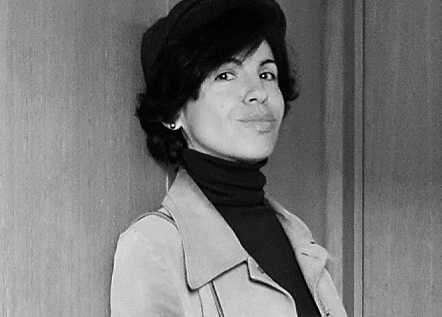
Annalisa Metta
Landscape architect and lecturer
Annalisa Metta is Professor of Landscape Architecture at Roma Tre University, where she teaches theory, criticism and design of open spaces. An Italian Fellow at the American Academy in Rome, she is President of IASLA, the Italian Scientific Society of Landscape Architecture (2025–28). Her writings include the book Il paesaggio è un mostro (DeriveApprodi, 2022) and the essay “Paesaggio” for the eleventh appendix of the Enciclopedia Italiana delle Arti e delle Lettere (Treccani, 2024). Her recent works include the Poste Italiane park on the Lungotevere Flaminio in Rome, inaugurated in 2024, and the installation In stato di grazia for the AMA Festival (Maddaloni, 2025, with F. Cimatti). In 2026 she is co-director of the Biennale dello Stretto, together with Alfonso Femia and Salima Naji.
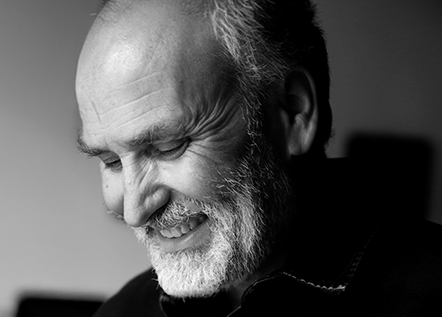
Ugo Morelli
Professor of psychology and Director of the School for the Governance of Territory and Landscape, Trento
A psychologist, essayist and scholar of cognitive science, Ugo Morelli teaches Cognitive Sciences Applied to Liveability, Landscape and the Environment at the Department of Architecture of the University Federico II of Naples, as well as Work and Organisational Psychology and the Psychology of Creativity and Innovation. He previously held professorships at the Universities of Bologna, Venice and Bergamo. His research spans work, organisation and knowledge, mind, learning and aesthetic experience, and the themes of liveability and sustainability in landscapes and ecosystems. He is Scientific Director of the Executive Course in Business Models for Environmental Sustainability at CUOA Business School and devised and directed the School for the Governance of Territory and Landscape of the Autonomous Province of Trento, where he currently directs the Master’s programme WNHM / World Natural Heritage Management, designed to train practitioners in the knowledge and management of natural sites on the UNESCO World Heritage list (the Dolomites and other mountain sites). He is the author of numerous publications, including Mente e paesaggio. Una teoria della vivibilità, Incertezza e organizzazione and Eppur si crea. Creatività, bellezza, vivibilità.
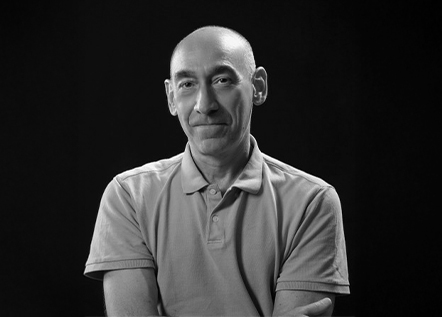
Lucio Nardi
Architect and lecturer
Lucio Nardi studied architecture in Venice (IUAV) and Berlin (UdK – Berlin University of the Arts). In 2005 he obtained a PhD in Architectural Design from IUAV. During the 1990s he worked in Berlin at the practices of Professor Giorgio Grassi (Milan) and Diener & Diener Architekten (Basel). Since 2001 he has practised independently in Berlin, where he has realised projects in industrial and residential architecture and restoration. Since 2010 he has promoted and organised participatory cultural projects in collaboration with residents’ associations, cultural bodies, theatre groups and schools. In particular, projects developed in the mining and industrial areas of former East Germany have been presented at numerous exhibitions and received several awards. He began his academic career in 2001 at the Bauhaus-Universität Weimar. Since then, he has taught in Italy (IUAV Venice, SUN Naples, University of Cagliari) and Germany (Bauhaus-Universität Weimar, UdK Berlin, MSA Münster). He currently teaches architectural and urban design at the Münster School of Architecture and collaborates with the Vietnamese German University in Ho Chi Minh City, Vietnam.
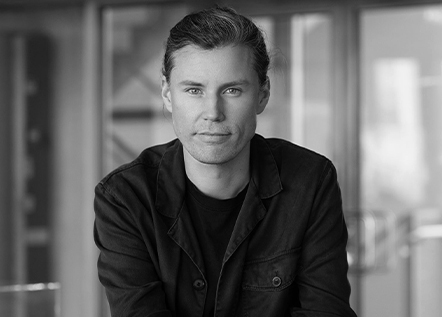
Oskar Norelius
Architect, CEO White Arkitekter, Stockholm
Oskar Norelius is a Swedish architect, Partner and Managing Director at White Arkitekter in Stockholm, one of Scandinavia’s leading architecture firms. He studied architecture in Sweden, Paris, and Spain before joining White in 2007, where he has played a key role in the firm’s international expansion and design strategy.
Notable projects include Stockholm Wood City, a multifunctional urban district set to become the world’s largest wooden structure, and the award-winning Sara Culture Center, one of the tallest wooden buildings ever constructed.
Oskar’s work has been featured in the traveling exhibitions *A Heart of Wood*, produced for Aedes Berlin, and *150,000 Trees* at the 2023 Venice Biennale. He is also a frequent speaker and keynote presenter at universities and international architecture forums.
In 2025, Oskar was selected as one of the “40 Under 40 Europe in Architecture and Design” by the European Centre for Architecture, Art, Design, and Urban Studies.
White Arkitekter is an interdisciplinary collective comprising 600 architects, designers, and sustainability experts with offices in Sweden, Germany, and the United Kingdom. With a mission to promote sustainable living through the art of architecture, White operates at the intersection of research, practice, and innovation, creating inclusive and resilient environments for present and future generations.
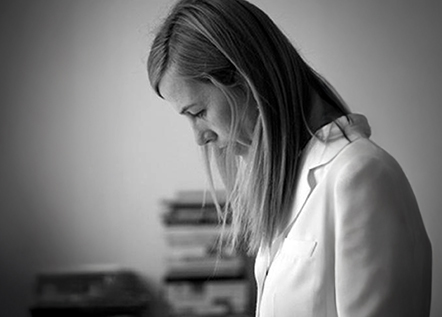
Raffaella Laezza
Scientific director, IUAV
An architect with a PhD from IUAV University of Venice, where she is Scientific Director of the “Architecture CO2=0” Master’s programme. A theorist of Eco Generative Architecture, she has developed a design method that unites macro and micro visions of nature to generate sustainable ephemeral and sacred spaces. Her work focuses on strategies for decarbonising the built heritage and on bioclimatic design models, integrating energy performance, spatial quality and environmental responsibility. She has realised numerous carbon-neutral certified pavilions, including “Futura alata e coltivabile” (2025) and various installations for Futura_Economia X l’Ambiente Expo in Brescia, and was invited to the Venice Architecture Biennale in 2025 and in a previous edition. She is the author of several volumes, including Natura d’architettura 1-7 (LetteraVentidue, 2024) and Codex of Temporary (LetteraVentidue, 2018). She divides her time between Milan, Venice and Trieste.
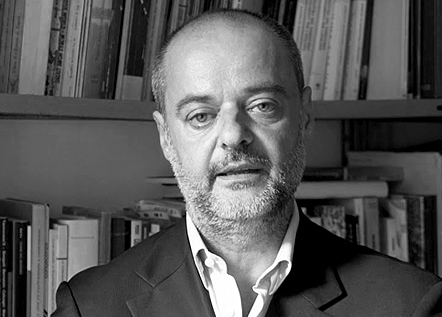
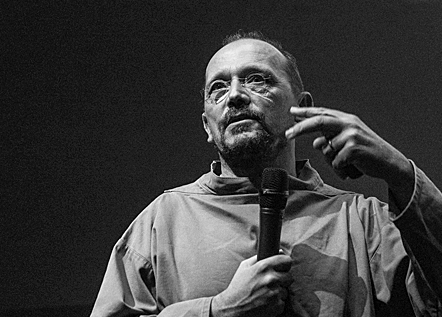
Raul Pantaleo
Architect, founder of TAMassociati, lecturer
Architect and graphic designer, Raul Pantaleo is co-founder and senior partner of the Venice-based practice TAMassociati, specialising in impact design and sustainable design in the social and humanitarian sphere. Since 2004 he has collaborated with the NGO Emergency, designing hospital facilities in numerous countries including Sudan, Sierra Leone, the Central African Republic, Afghanistan and Uganda — among them the “Salam” cardiac surgery centre in Khartoum, awarded the Aga Khan Award for Architecture in 2013. With TAMassociati he has received numerous international awards, including the Curry Stone Design Prize (2013), the Zumtobel Group Award (2014) and the title of Best Italian Architect of the Year (2014). In 2016 he was a member of the curatorial team for the Italian Pavilion at the 15th Venice Architecture Biennale and a tutor for the G124 working group led by Renzo Piano at the Senate of the Republic. Since 2019 he has been a contract professor of Architectural Composition at the University of Trieste. Together with Marta Gerardi, he is also the author of several volumes combining architecture, comics and narrative reportage, including Architetture resistenti (Becco Giallo, 2013), La nave (Becco Giallo, 2024) and Architetture del noi (Elèuthera, 2025).
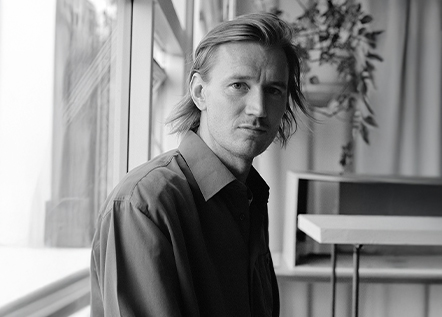
Søren Pihlmann
Founder of Pihlmann Architects
Born in Copenhagen in 1987, Søren Pihlmann studied architecture at the Royal Danish Academy of Fine Arts, graduating in 2014. After co-founding the practice Lenschow & Pihlmann with Kim Lenschow, he established Pihlmann Architects in 2021, a Copenhagen-based practice that has rapidly gained international attention for its radically honest approach to materials and the existing built fabric. His practice — which he himself describes as “generative preservation” and “curious curation” — proceeds from a stated principle: the starting point is not what one might wish for, but what already exists. Treating existing buildings as reservoirs of materials and resources, he seeks to reveal hidden value in structures, materials and spaces otherwise taken for granted or overlooked, transforming them without erasing their history. Notable projects include Thoravej 29 (Copenhagen, 2025), the transformation of a 1960s factory into a community arts hub in which 95% of materials were reused on site, a finalist project for the EUmies Awards. In 2025 he represented Denmark at the Venice Architecture Biennale with the pavilion Build of Site, refurbishing the pavilion itself and turning the exhibition space into an ongoing construction site, in which surplus materials and the construction process itself became the heart of the exhibition and of a curatorial practice of reuse. His honours include the Henning Larsen Foundation Honorary Award (2022) and the Årets Arne (2023) — Denmark’s most prestigious architecture prize, named after Arne Jacobsen — awarded for the House14a project. In 2025 The Architectural Review named him among the most significant emerging architects, and he was also a finalist for Dezeen’s Emerging Architect of the Year.
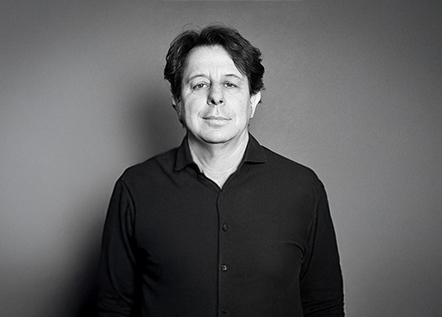
Benedetto Quaquaro
Architect, designer and PhD
Architect, designer and PhD, Benedetto Quaquaro is an international reference point in the field of design for extreme and space environments. He teaches at the School of Design of the Politecnico di Milano within the Master of Science programmes in Interior and Spatial Design and Integrated Product Design, and heads ESA_LAB@PoliMi_Design, a research laboratory developed in collaboration with the European Space Agency (ESA).
Together with Annalisa Dominoni, he devised and directs Space4InspirACTion, the first academic course in space architecture and design supported by ESA (since 2017), and X-Habitat, a programme dedicated to design for extreme environments (since 2025).
He began his career in naval design, before collaborating with Tecno, founded by Osvaldo Borsani, working alongside architects such as Norman Foster and Gae Aulenti and artists such as Bruno Munari and Arnaldo Pomodoro. In 2011, together with Annalisa Dominoni, he founded the practice (a+b) dominoni quaquaro, active in transportation design, fashion technology, and product and furniture design. The practice develops projects that integrate technological innovation, ergonomic research and sensory quality. Notable projects include the Leonardo trains for the Milan metro for ATM-Hitachi Rail Italy, the Pinna acoustic elements for Caimi Brevetti, and the Sensory Space Station, a concept developed for Thales Alenia Space dedicated to astronauts’ perceptual wellbeing.
He conducts research and design work with ESA, NASA, ASI, Thales Alenia Space, Virgin Galactic, Argotec and numerous Italian design and industrial companies. He is also curator of Design Spaziale Italiano, a touring exhibition project promoted by the Ministry of Foreign Affairs on the contribution of Italian design to innovation in space exploration. His projects have been exhibited at international venues including the Triennale di Milano, the Museo Nazionale Scienza e Tecnologia “Leonardo da Vinci” and the London Science Museum. He has received numerous international awards, including the ADI Design Index, the DIA Design Intelligence Award Honourable Mention, the Premio Focus Raymond Zreick, and the BIG SEE Product Design Award.
An Italian Design Ambassador and visiting professor at prestigious international universities, he is the author of essays and publications dedicated to design culture and space design.

Laura Ragazzola
Journalist
An architect and journalist, Laura Ragazzola worked until 2018 at Interni, an international monthly magazine dedicated to architecture and design. As head of the architecture section, she developed a thorough knowledge of the international architectural scene, with particular attention to Nordic projects, sustainability, and new approaches and strategies for minimising environmental impact. She has met and interviewed leading practices, including Snøhetta, MVRDV, BIG, SHoP, Diller Scofidio + Renfro, Shigeru Ban, Zaha Hadid, Michele De Lucchi, Bouroullec, Kengo Kuma, UNStudio, OMA, 3XN, Philippe Starck, Herzog & de Meuron, Sean Godsell, Mario Botta, Grafton and Francis Kéré, among others. As a freelance journalist she writes for Corriere della Sera, Sette, D-La Repubblica, Domus, Arketipo, Abitare and Home Italia. In 2020 she curated a series of webinars on architectural design entitled “RETHINKING DESIGN”, and since 2022 a series, “UN ARCHITETTO ITALIANO A…”, dedicated to talented young Italian architects working abroad. She is among the curators of SEED.
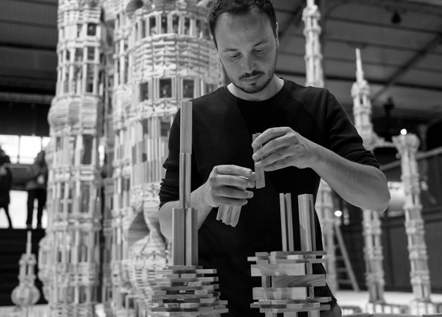
Raffaele Salvoldi
Artist, performer
Director of photography for more than ten years in film, advertising and documentary production, collaborating with brands such as Giorgio Armani, Lavazza and Universal Music Italia. In 2021, during lockdown, he began a path of artistic experimentation, creating architectural installations built with Kapla wooden building blocks, combining two long-standing passions: wood and architecture. His works, built live in front of audiences as genuine performances, are eventually dismantled or demolished in a collective event, forming a cycle of construction and deconstruction that reflects on the transience of beauty. In 2019 he created his first permanent installation, La Stanza Magica, at Casa Bossi (Novara), and in 2022 he launched the Wood Arc project. Since 2023 he has collaborated with the Salvatori brand, experimenting for the first time with natural stone — Carrara marble, Pietra d’Avola, Grigio Versilia — to create permanent installation works.

Maria Soave
Rai journalist
A professional journalist since 2003, Maria Soave has worked with Il Messaggero and Il Sole 24 Ore — covering the economies of Umbria, the Marche and Tuscany — and with the RCS MediaGroup. In 2004 she joined Rai, initially at Tg3, before moving to Tg1, where she served as head of the domestic affairs desk and presented various editions of the news bulletin over the years, from the late-night to the early-evening and 1:30pm slots. In 2009 she moved from the economics desk to the political desk, remaining there until 2023. Since September 2023 she has presented Tg1 Mattina, while since 2022 she has co-hosted Unomattina Estate on Rai1 with Massimiliano Ossini. Since 2024 she has also presented Agorà Estate on Rai3, a programme dedicated to the economy, employment and housing.