Data Room
Transforming Data into a Common Good.
Seed Festival presents the first Data Room
dedicated to Planetary Health.
Today, understanding the world means learning how to read data. Every figure tells a story of transformation: it reveals how ecosystems are changing, how cities are evolving, how inequalities are widening or narrowing, and what impact our choices have on the planet and on future generations. Yet data alone is not enough. It only acquires value when it becomes shared knowledge, capable of informing decisions, enriching public debate and making each of us more aware of our role. At a time when the future of humanity depends on our ability to interpret complexity, turning information into a common resource means creating the tools to imagine fairer, more sustainable and more inclusive futures. Because knowledge is not simply about measuring the present: it is about creating the conditions to change it.
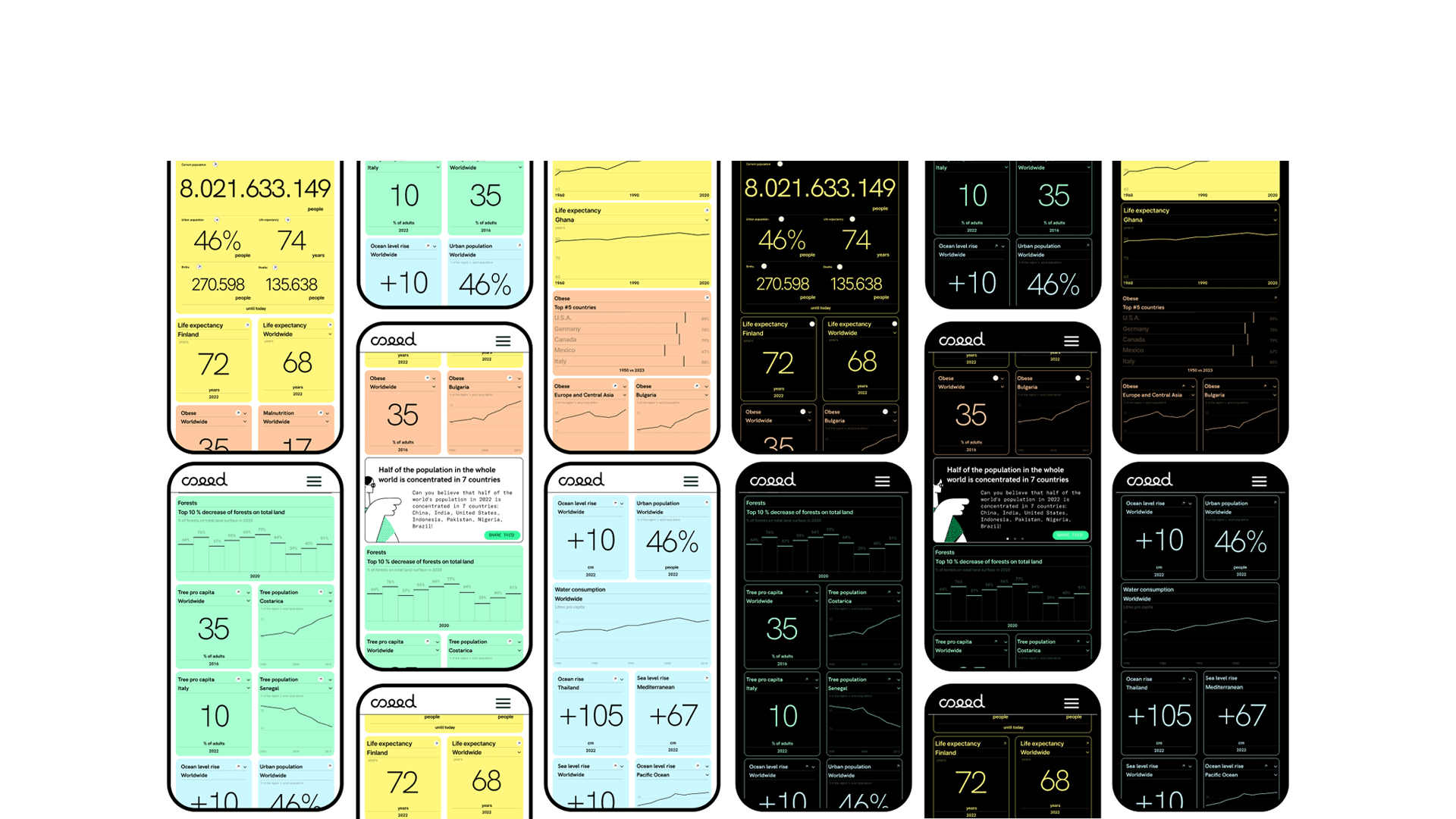
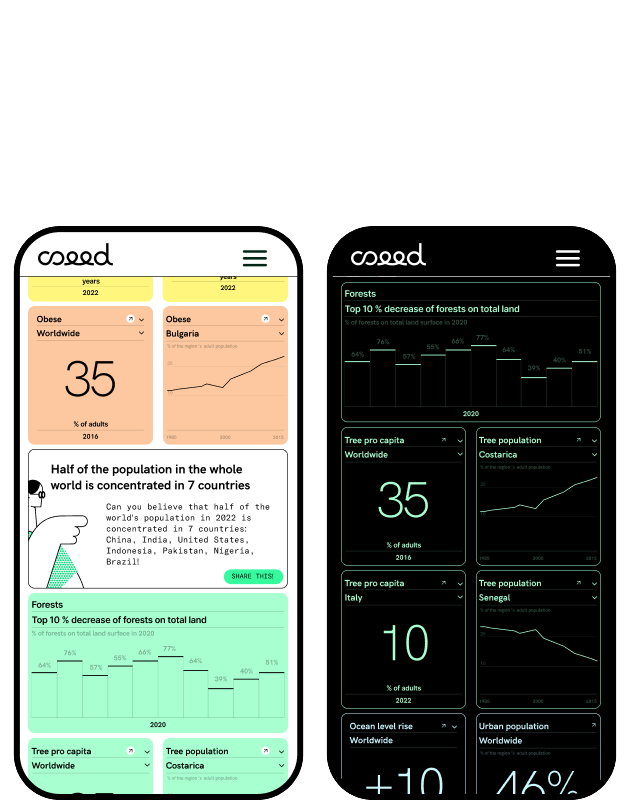
This vision lies at the heart of the Seed Data Room: both a physical space and an open digital platform, designed by Sheldon.studio to transform data into an experience of knowledge. It is an interactive environment where figures, indicators and data visualisations become tools for understanding the complexity of the present and exploring possible future scenarios. The Data Room is freely accessible, with no restrictions on consultation, from any device and at any time, ensuring that knowledge extends beyond the boundaries of the Festival to become a shared resource for researchers, designers, students, institutions and citizens alike.
How Data Room
works
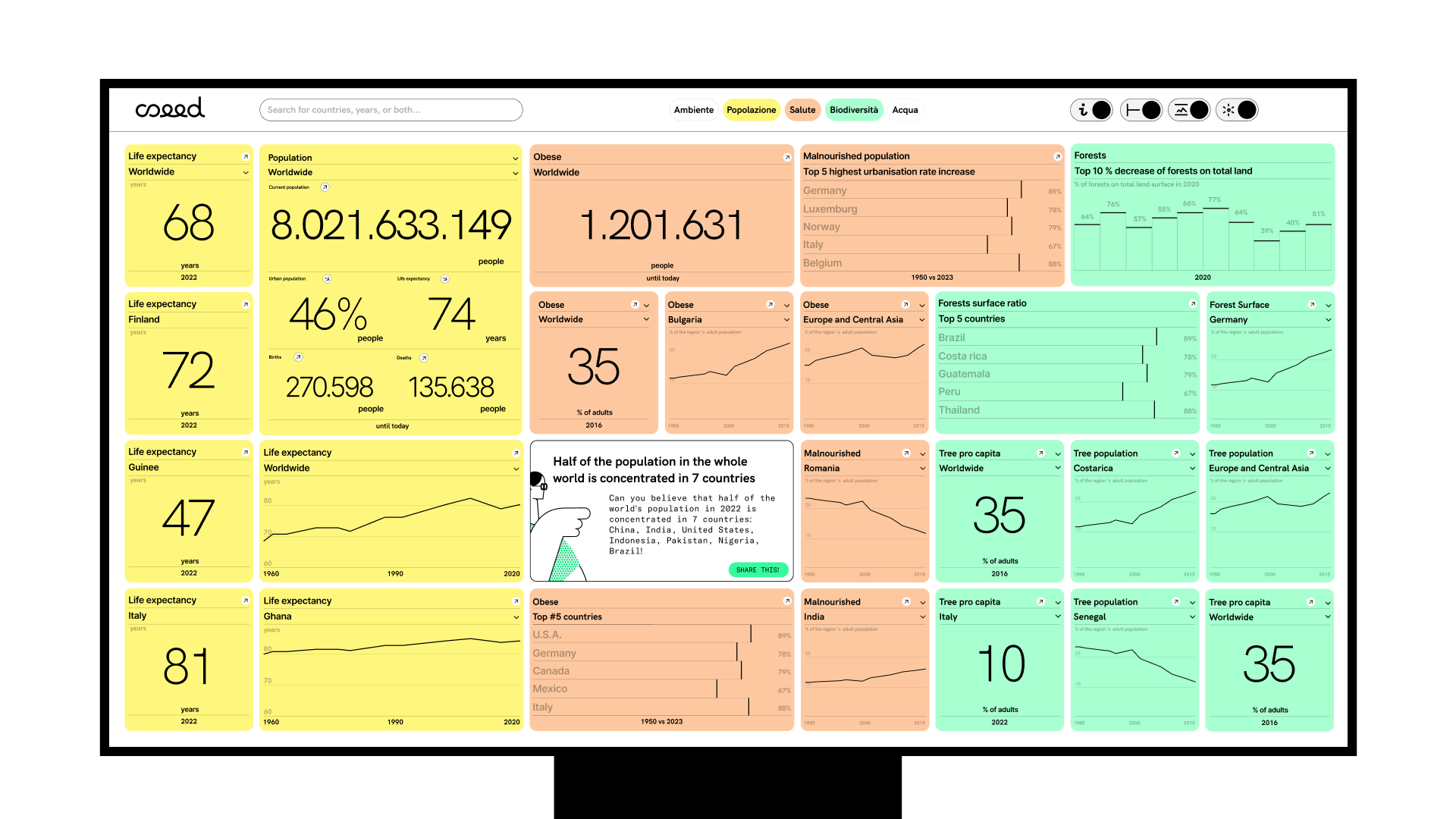
Data Room promotes a semantic and interactive exploration of large information sets through five main indicators.
Through five key indicators – Population, Environment, Biodiversity, Health and Water – the platform enables users to explore data organised by theme, location and historical period, revealing connections between phenomena that might otherwise appear unrelated. Understanding these relationships means reading the present with greater awareness and acquiring the tools needed to design the future.
But the Data Room goes one step further. Data is not the end point of the analysis; it is the starting point of the design process. Seed’s four research trajectories – Being Human, Inhabiting the Planet, Inhabiting Elsewhere and New Dynamics of Power – transform evidence into questions, bringing design into dialogue with science, technology, philosophy and economics to address the defining challenges of our time.
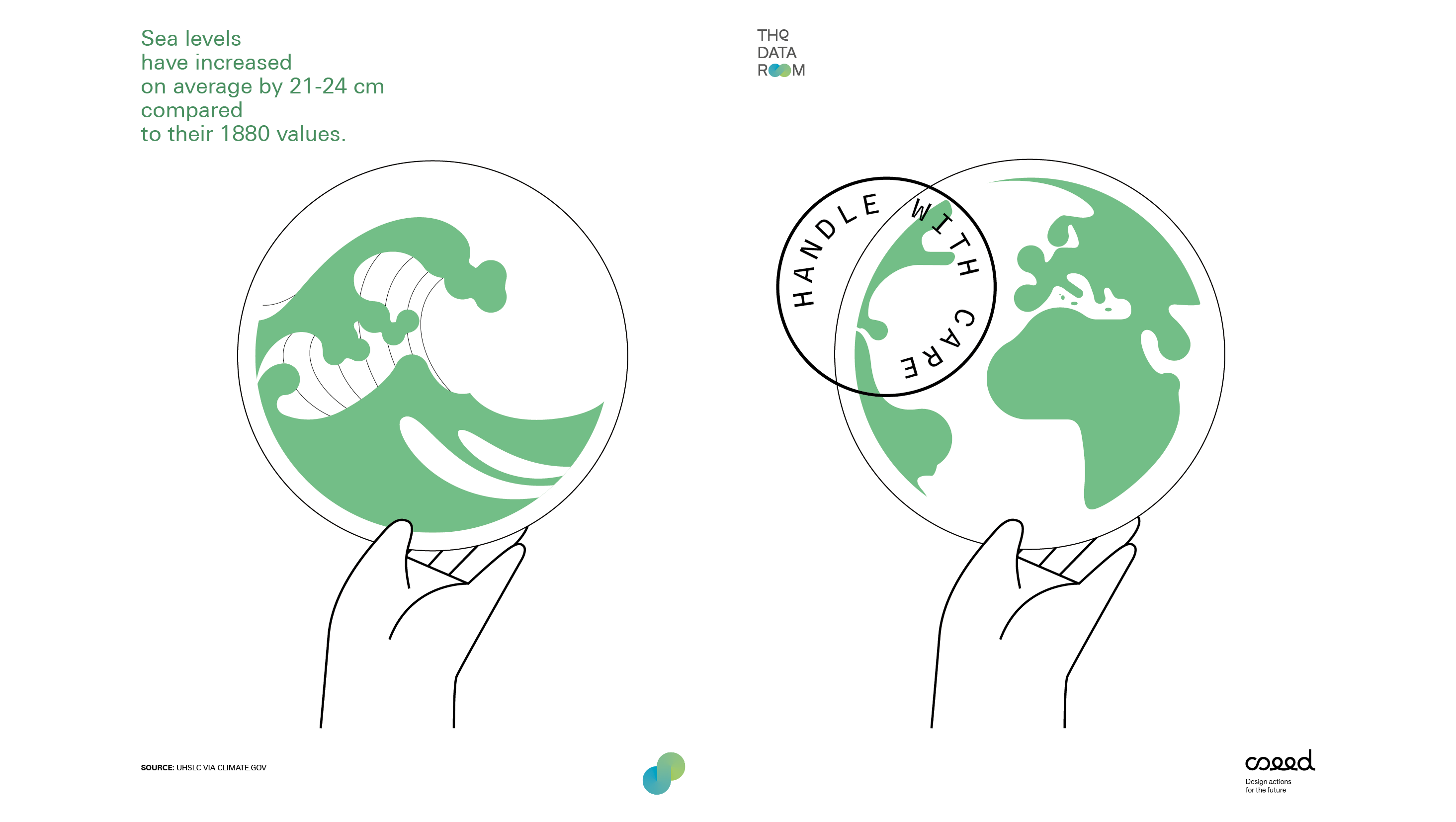
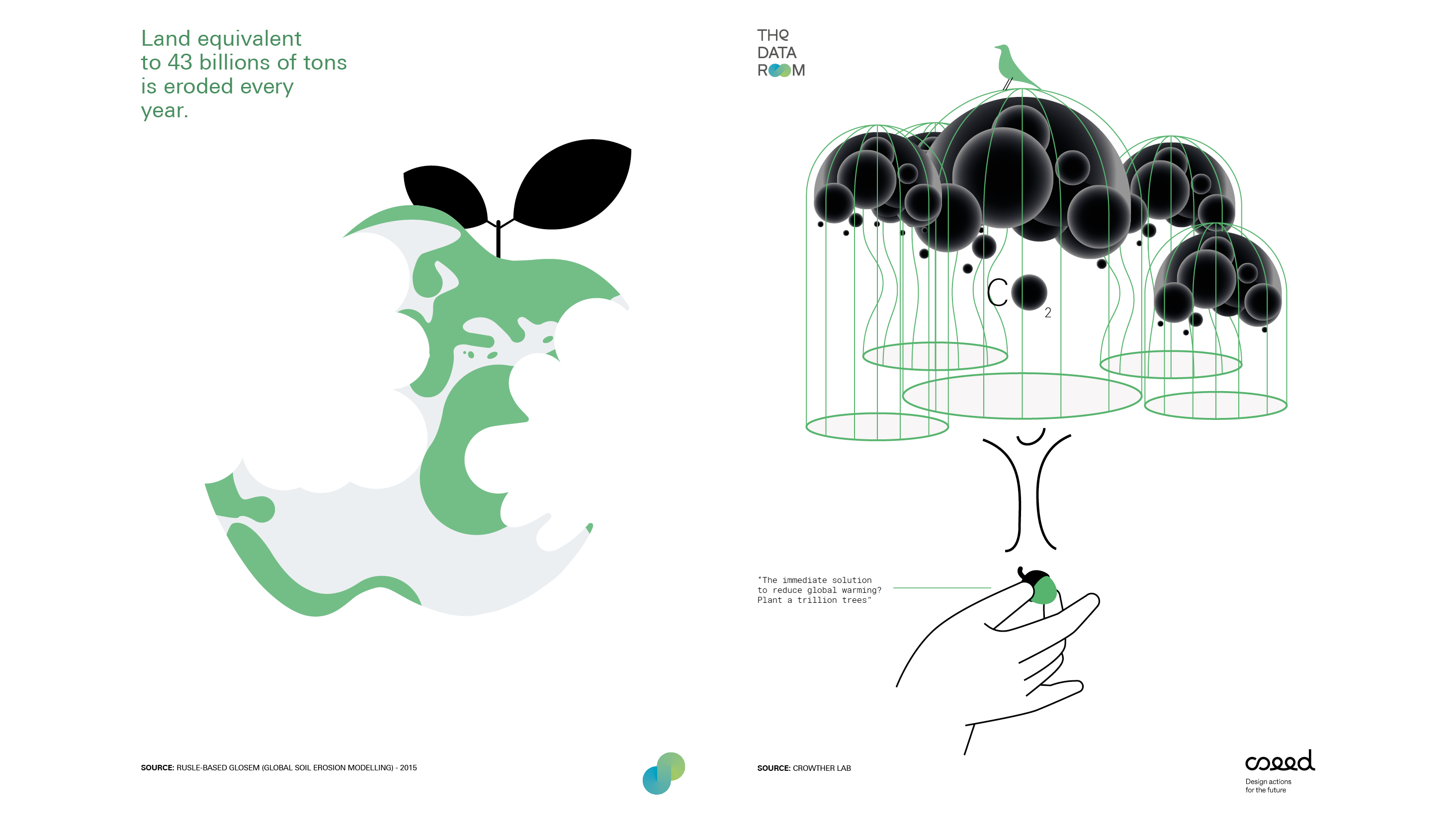
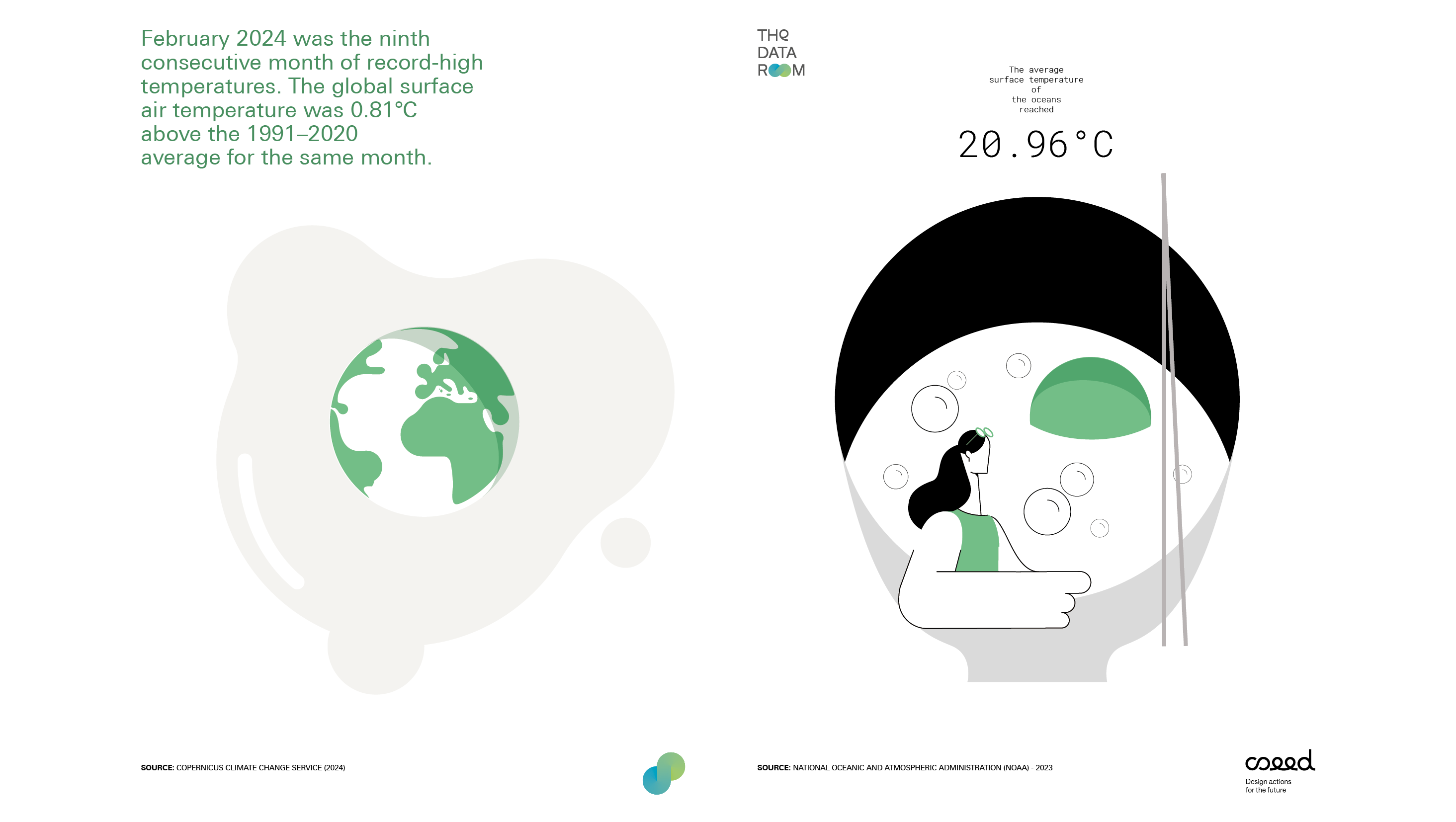
Its most profound quality, however, lies in the very meaning of data itself. The Data Room is neither an archive to be consulted nor a technical dashboard, but a cultural infrastructure that transforms information into shared knowledge. Here, data becomes a common language, capable of connecting disciplines, fostering dialogue and generating new perspectives. Because only when knowledge is open, accessible and shared can it become a tool for design and help build a more informed and conscious future.