

Contributors
Filter contributors by:
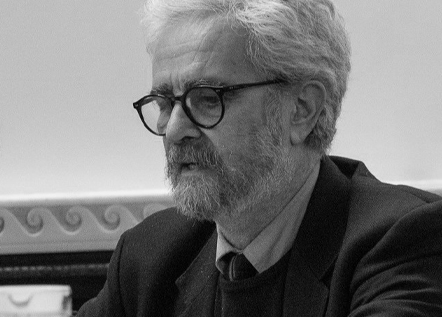
Renzo Bassani
Architect and editorial curator for Seed magazine
Renzo Bassani, an architect, is active in professional, cultural, and editorial fields related to contemporary architecture, the city, and the relationships between space, society, and culture. He is the editorial director of SEED – Collana editoriale and, for IN/Arch – Istituto Nazionale di Architettura, serves as the head of the Architecture and Cultural Diplomacy division for 2026–2029. His most recent research explores architecture as an infrastructure for relationships and as a tool through which to understand and interpret the transformations of contemporary society.
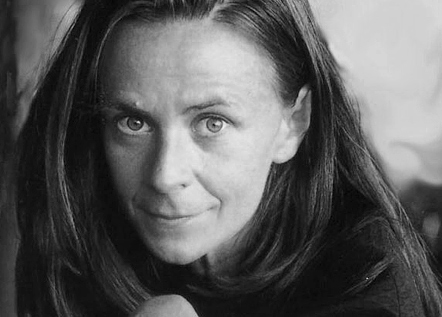
Alessandra Battisti
Architect, PhD, Lecturer
Full Professor of Environmental Technological Design at the Department of Planning, Design and Technology of Architecture (PDTA) of the Faculty of Architecture at Sapienza University of Rome, where she holds the following roles: Director of the Second-Level Master’s Programme (ETD) in Environmental Technological Design – Green Building / Architectural and Urban Regeneration / Green-Blue Infrastructure (since 2024); Coordinator of the Environmental Technological Design curriculum within the PhD Programme in Planning, Design and Technology of Architecture (since 2024); Member of the second Master’s Degree Course “ACT: Enhancement and Management of Minor Historic Centres. Environment–Culture–Territory, Integrated Actions” (2011–present); and involved with Horizon 2020 (2013–present).
Organiser and Scientific Coordinator of international conferences, she has been a speaker at 150 international conferences and congresses since 1993. She has been a member of the steering committee of In/Arch – National Institute of Architecture since 2022. For her design and experimental design work at national and international level, she has received 31 awards and honours. She is the author of 280 publications — including books, articles in scientific journals, and book chapters — among them 14 monographs and 30 articles in Class A journals, as well as 5 edited academic volumes and 5 special issues of scientific journals as guest editor.
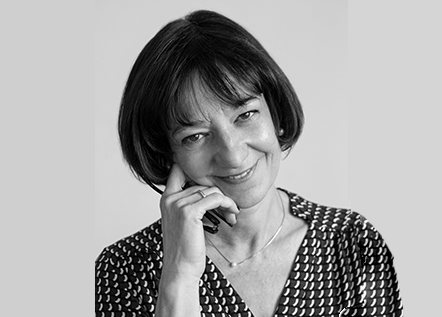
Barbara Binelli
Gestalt counsellor
An expert in adult pedagogy, Gestalt counsellor and coach, Barbara Binelli works with organisations and entrepreneurs to facilitate the development of mindful relationships conducive to wellbeing and results. She integrates philosophical study with contemplative, somatic and artistic practices (Danza sensibile®).
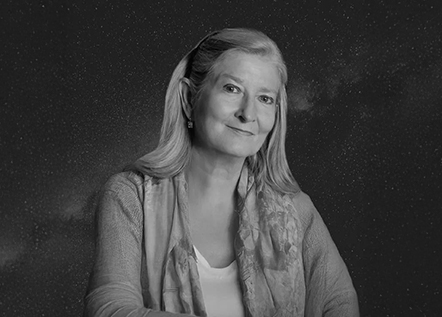
Patrizia Caraveo
Astrophysicist, President of the Italian Astronomical SocietyAstrophysicist, President of the Italian Astronomical Society
Patrizia Caraveo is a Research Director at the Italian National Institute for Astrophysics (INAF) and has directed the Institute for Space Astrophysics and Cosmic Physics in Milan. For her contributions to understanding the high-energy emission of neutron stars, she received the National Prize of the President of the Republic in 2009 and the Enrico Fermi Prize of the Italian Physical Society in 2021. In 2014 she was included in the list of Highly Cited Researchers and received the Outstanding Achievement Award from Women in Aerospace Europe. Author of more than 470 scientific papers, with an impact factor exceeding 120, she is the most-cited active Italian researcher in the field of astrophysics. As a member of the Swift, Fermi and AGILE collaborations, she shared the Bruno Rossi Prize of the American Astronomical Society with colleagues on three occasions, in 2007, 2011 and 2012. In 2017 she was named Commander of the Order of Merit of the Italian Republic. In 2025 she was elected President of the Italian Astronomical Society. She is a member of Gruppo 2003 for scientific research and of the “100 Women Against Stereotypes” initiative. Highly active in science communication, she has published 12 books.
Michele Brunello
Founder of Dontstop Architettura and lecturer at IUAV
Architect, designer and curator, and partner of Stefano Boeri until 2017 and co-founder of SBA China. Since 2011 he has led, together with Marco Brega, the practice DONTSTOP Architettura, with which he has realised projects in Italy and abroad, notably “Abitare in Maggiolina”, the new Master Plan for the Municipality of Pordenone, and the restyling works at the San Siro Stadium and the Inter and Milan sports centres. His work sits at the intersection of architecture, design, research and international cooperation, with particular attention to relations between Europe and Asia, which he promotes as creative director of the Sino European Innovation Institute and through curating international programmes, including Across Chinese Cities at the Venice Architecture Biennale and XPort at Suzhou Design Week. In 2022 the practice was transformed into Dontstop Architettura srl, broadening its corporate structure and joining Progetto CMR International, a leading Italian integrated design group. Since 2016 he has been founder and creative director of the Sino European Innovation Institute in Milan, and co-curator of the research programme Across Chinese Cities, with which he has taken part in the Collateral Events of the Venice Architecture Biennale. He has held workshops and lectures at international institutions such as the AA School in London, Graz University of Technology and the Politecnico di Milano, combining his design practice with a long-standing editorial collaboration with magazines such as Domus and Abitare. He teaches on the “Architecture CO2=0” (Architectural Carbon Neutral Balance) master’s programme at IUAV, Venice.
Valentina Borgnini
Art historian
An art historian and teacher of art history, Valentina Borgnini has spent more than twenty years studying and promoting the artistic and monumental heritage of Umbria. She is the author of a detailed study on the history of the San Francesco al Prato complex in Perugia, whose lengthy restoration and reopening as an auditorium she followed closely. She has also curated the narrative of the history of the Cappella degli Oddi, including the virtual repositioning of Raphael’s Coronation of the Virgin, together with various exhibition and educational projects in collaboration with museums and schools across Umbria. She is currently working on a digital twin of the monumental complex and its historical and artistic heritage.
Luisa Damiano
Philosopher of science and expert in social robotics
Luisa Damiano, PhD, is Full Professor of Logic and Philosophy of Science at IULM University in Milan, where she directs the PhD School for Communication Studies and co-directs the CRiSiCo research centre (Research Centre on Complex Systems). She was previously Associate Professor at the University of Messina, coordinating the research group in the epistemology of artificial sciences. She is among the leading international experts in social robotics and the philosophical, ethical and communicative implications of interaction between humans and artificial systems. Her research spans the epistemology of complex systems to the philosophy of mind, with particular attention to social and cognitive robotics. Central to her work are the questions that arise when robots cease to be mere tools and become relational agents: the expectations, emotions and social dynamics activated in the encounter between human and artificial, and the ontology that emerges from the creation of machines capable of behaving as social beings. Her thinking also addresses ethical questions concerning the use of robots in care, assistance and education, opening fundamental questions about human identity and models of coexistence in a post-anthropocentric era. She collaborates with researchers in robotics, cognitive science and philosophy on international projects exploring the boundary between biology and technology, and between the natural and the artificial, and has worked with institutions such as the University of Hertfordshire and Ritsumeikan University in Kyoto. She is co-author, with Paul Dumouchel, of Living with Robots (Harvard University Press, 2017), and has curated projects combining art and social robotics, such as ScentDia, presented in 2025 at the Museo Nazionale Scienza e Tecnologia Leonardo da Vinci in Milan.
Luca De Biase
Journalist and writer
Luca De Biase is an award-winning innovation journalist, essayist, professor and researcher, author of numerous successful books and pro bono contributor to Italian and European policy initiatives. A graduate in Economics from Bocconi University, he began his career in social history, working with Fernand Braudel in Paris, Aldo De Maddalena in Milan and Claudio Povolo in Venice. He then became a journalist, contributing to the launch of a financial daily in Italy, while continuing his research into ethics and economics for an Italian bank and into local development at the OECD. Since 1994 he has viewed the internet as a great opportunity to develop new ideas in journalism, and in 2005 he founded the Nòva project for Il Sole 24 Ore, which he directed for around fifteen years. He is currently Director of the Media Ecology research network at Reimagine Europa and Director of the Imminent Research Center, dedicated to the economics of language and artificial intelligence, at Translated. He hosts podcasts on media ecology and the knowledge society and teaches at the Universities of Pisa and of Modena and Reggio Emilia. He is the author of numerous volumes, including Armonie future (Rubbettino, 2021), Il lavoro del futuro (Codice, 2018), Come saremo, with Telmo Pievani (Codice, 2016), Homo pluralis (Codice, 2015), Media civici (Vita Feltrinelli, 2013), Cambiare pagina (Rizzoli, 2011), Economia della felicità (Feltrinelli, 2007) and Amore di Stato. Venezia Settecento (Sellerio, 1992). He defines innovation journalism as the development of a forward-looking perspective on events — a sort of history of the future, requiring humility and passion alongside rigorous research.
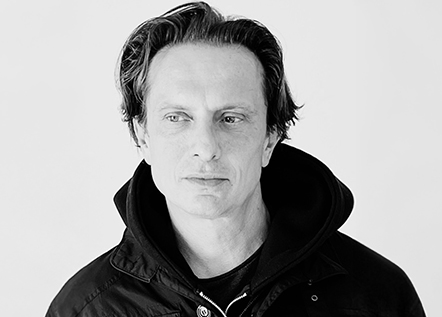
Giovanni Di Leo
Architect
Giovanni Di Leo is an architect who graduated with honours from the University of Naples Federico II, where he went on to pursue further studies through Master’s programmes in Urban Management (Domus Academy) and in Technical Management of Public Works (Oikos), together with research in Sustainable Urban Design (Roma Tre University) and Environmental Reconversion Techniques (University of Campania). After working as a partner at Pica Ciamarra Associati, where he was responsible for environmental quality, he founded GDLA Studio di Architettura in 2005. His work focuses on urban regeneration, sustainability and the quality of living environments, through projects in architecture, urban planning and interior design. Alongside his professional practice, he maintains an intense activity in research, scientific coordination and dissemination on urban policy and design culture. He served as IN/Arch scientific coordinator for the European Windat network (European Commission – DG Energy and Transport), coordinated working groups for the National Centre for Bioclimatic Architecture (ENEA), and acted as a Federcasa consultant on the ecosystemic quality of Neighbourhood Contracts. He has contributed to defining codes for the environmental quality of buildings and living environments, including the code developed for the SEED Festival. He currently coordinates the “Architecture, Europe, Living Environments” programme and is a member of the Scientific Committee and Legislative Commission of the National Institute of Architecture. He also carries out editorial work for the international journal Le Carré Bleu and for L’Industria delle Costruzioni, and has given evidence to the Chamber of Deputies and the Senate on architectural quality, urban regeneration and demographic transition.
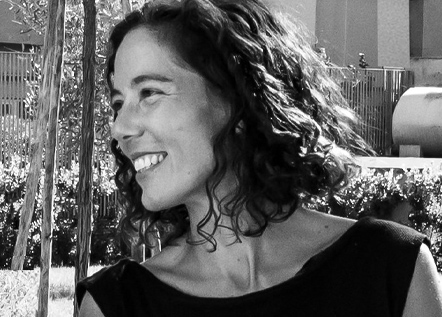
Barbara Cadeddu
Engineer, PhD, curator and strategic consultant
An engineer with a PhD in Architectural and Urban Composition, Barbara Cadeddu works in the fields of strategic planning, local development, and the design, programming and management of complex interventions funded by European, national and regional funds. Her work integrates urban design, social innovation and public policy, with particular attention to territorial regeneration processes, place-based strategies and participatory methodologies. She has held institutional and strategic consultancy positions, including Councillor for Strategic Planning and Community Programming of the Municipality of Cagliari (2013–2016), consultant to the Tourism Councillor of the Autonomous Region of Sardinia (2019–2020), and consultant to KPMG Advisory S.p.A. for technical assistance to the Autonomous Region of Sardinia in implementing the Regional ESF+ Programme 2021–2027 (2023–2024). She currently coordinates the drafting of the Strategic Plan for the Province of Sulcis Iglesiente, is a consultant to the Fondazione Cammino Minerario di Santa Barbara for the development and implementation of the Integrated Territorial Investment under the ERDF Regional Programme Sardinia 2021–2027, and to the Union of Municipalities of Barbagia, Fonni and Orani for the development of project sheets relating to the National Strategy for Inner Areas 2021–2027. Alongside her professional activity, she has held an academic post as a contract professor of Architectural and Urban Design at the University of Cagliari, where she taught and conducted research from 2007 to 2019. In the cultural sphere, she curates and coordinates international programmes dedicated to architecture, design and innovation. Since 2021 she has curated SEED. Design Actions for the Future; since 2020 she has coordinated AJU/AJA, a project dedicated to design and craft culture with scientific responsibility held by Triennale Milano; and she was scientific coordinator of FESTARCH – International Architecture Festival, conceived by Stefano Boeri and promoted by RCS MediaGroup. Since 2023 she has been a member of the Steering Committee of the National Institute of Architecture and an associate member of the Italian Institute of Project Management (ISIPM). Since 2026 she has been President of the Sardinia Section of IN/Arch. She is the author of numerous publications.
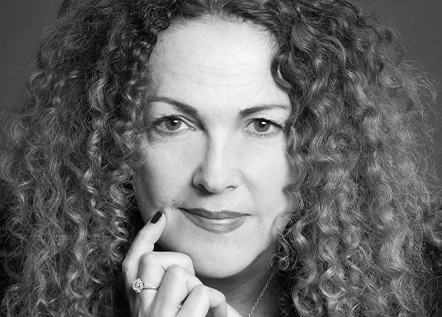
Annalisa Dominoni
Designer and architect
rchitect, designer and PhD, Annalisa Dominoni is an international point of reference in the field of design for extreme and space environments. She teaches at the School of Design of the Politecnico di Milano, where she heads ESA_LAB@PoliMi_Design, a research laboratory developed with the European Space Agency (ESA). She devised and teaches the Space4InspirACTion programme, the first academic course in space architecture and design supported by ESA, and X-Habitat, dedicated to design for extreme environments. Her research integrates neuroscience, behaviour and design to develop solutions for confined environments, high-criticality systems and emergency scenarios. She has also devised the Use & Gesture Design (UGD) methodology, applied to the systemic and behavioural dimension of design.
Founder of the Millennium Charter of Space Architecture (Houston, 2002), she has coordinated and developed research projects for space exploration with ESA, NASA and ASI, contributing to equipment tested on the International Space Station. She collaborates with aerospace industries such as Thales Alenia Space, Virgin Galactic and Argotec, with research bodies and government institutions, and with leading Italian design and industrial companies. She has received numerous international awards over the course of her career, including the Compasso d’Oro, the ESA Scientific Award for Young Researchers, the ADI Design Index, the BIG SEE Product Design Award, and the Premio Focus Raymond Zreick for Technology and Innovation.
Her projects have been exhibited at international institutions and events, including the Triennale di Milano, the Museo Nazionale Scienza e Tecnologia “Leonardo da Vinci”, the London Science Museum and the Frankfurt Messe. She is also curator of Design Spaziale Italiano, a touring exhibition project promoted by the Ministry of Foreign Affairs dedicated to the contribution of Italian design to innovation in space exploration. An Italian Design Ambassador and visiting professor at prestigious international universities, she has published more than 200 scientific contributions and numerous monographs, contributing decisively to establishing space design as a recognised international discipline.
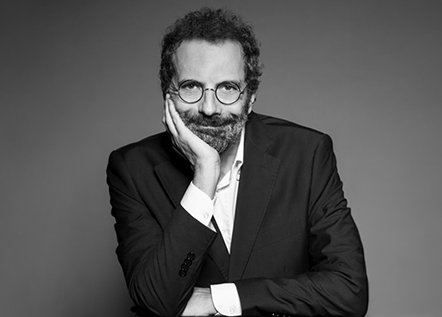
Nicola Campogrande
Composer, artistic director, music critic and radio and television presenter
Composer, artistic director, music critic and radio and television presenter, Nicola Campogrande graduated in composition from the Conservatories of Milan, under Azio Corghi, and of Paris. He is regarded as one of the most important Italian composers of his generation: his music, published exclusively by Breitkopf & Härtel since 2017, has been performed by artists such as Riccardo Chailly, Gautier Capuçon and Lilya Zilberstein in prestigious venues including Teatro alla Scala and the Philharmonie de Paris. His catalogue comprises more than 200 symphonic, chamber and theatrical works, including the operas Opera italiana and #Folon. Since 1998 he has presented cultural programmes on Rai Radio3 and for several years was a television presenter on Classica HD (Sky). He was artistic director of the MITO SettembreMusica festival from 2016 to 2023 and, for eleven years, of the Turin Philharmonic Orchestra; since 2023 he has been composer-in-residence of the Milan Symphony Orchestra and the Bologna Municipal Theatre. He contributes to the culture pages of Corriere della Sera and has written several works of musical popularisation, including Occhio alle orecchie, now in its sixth edition.
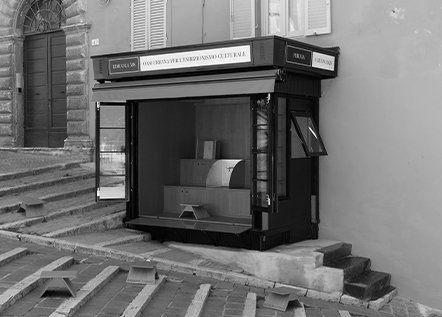
Edicola 518
The "rebel newsstand"
Edicola 518 is the rebel newsstand for lovers of fine paper. We, the artists of Emergenze, founded it on 1 June 2016 on the site of a historic newsagent’s in Perugia, and have made it a bookshop without equal anywhere in the world. Its selection offers a range unique in Italy of independent magazines, artists’ books, anarchist ephemera, fanzines and self-produced works under our own publishing imprint, Emergenze Publishing. We have defined the space of Edicola 518 as four square metres of infinite space.
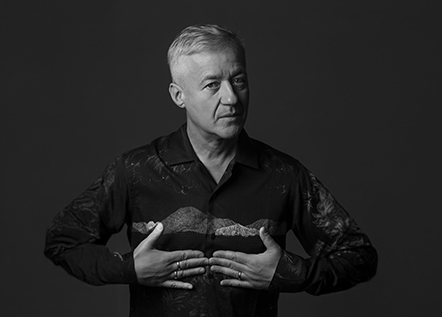
Max Casacci
Musician, producer, songwriter, sound engineer
The musical career of Max Casacci—guitarist, producer, and founder of Subsonica—began at the age of twenty with live music and soundtracks for film, experimental theater, and contemporary dance. He played in various bands, both in Italy and on international stages, until the formation of Subsonica. Throughout his musical career, Max has moved between the top of the charts and the most underground realms of musical exploration, blending pop and experimental sounds and collaborating not only with much of the Italian independent scene but also with Mina, Eugenio Finardi, Antonella Ruggiero, and Franco Battiato. EARTHPHONIA is the title of the first album created using sounds of nature, released on CD in 2020, and a book published by Slow Food and co-authored with Mario Tozzi, a geologist, science communicator, and environmentalist. The album/book sold 5,000 copies, received excellent reviews, and led to a tour featuring performances at major Italian music, science, and cultural festivals.
On several occasions, Max has welcomed representatives from the worlds of science and culture onto the stage, including Mario Tozzi himself, plant scientist Stefano Mancuso, evolutionary philosopher Telmo Pievani, physicist Guido Tonelli, marine biologist Mariasole Bianco, and philosopher Emanuele Coccia.
URBAN GROOVESCAPES (2022), also released on vinyl by 42 Records, is an electronic and dance music album in which the urban space itself “plays”: noises, acoustic signals, sounds of human presence during sporting events, and celebrity voices are processed and transformed into rhythm, immersing the listener in the sounds of everyday life.
THROUGH THE GRAPEVINE (42 Records) is an EP released in 2024 created exclusively with the sounds of wine and its production process inside a Franciacorta winery.
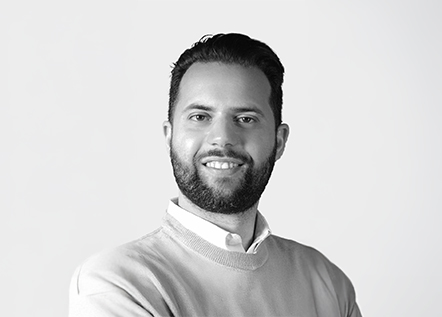
Matteo Cianchetti
Associate Professor at the BioRobotics Institute
Associate Professor at the BioRobotics Institute of the Scuola Superiore Sant’Anna, where he heads the Soft Mechatronics for Biorobotics Lab. He graduated with honours in Biomedical Engineering from the University of Pisa in 2007 and obtained his PhD in Biorobotics from the Scuola Superiore Sant’Anna. He is author or co-author of more than 100 international scientific publications and serves as Section Editor-in-Chief for the journal MDPI Actuators, as well as Associate Editor for IEEE Robotics and Automation Letters and Frontiers in Robotics and AI. He chairs the IEEE Technical Committee on Soft Robotics and has received, among other honours, the Harashima Award for Innovative Technologies at the IROS Awards. His research focuses on the development of soft robotics technologies, with particular attention to actuators, sensors and flexible mechanisms, within numerous EU-funded projects.
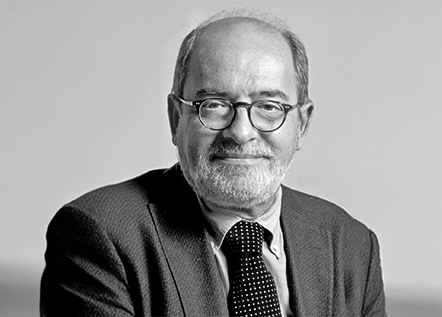
Vittorio Gallese
Neuroscientist and professor
Neuroscientist and Full Professor of Psychobiology in the Department of Medicine and Surgery at the University of Parma, having previously served for many years as Full Professor of Human Physiology at the same university. A graduate in Medicine specialising in Neurology, he was part of the research group that discovered mirror neurons in 1992 — the most-cited Italian discovery in the international scientific literature — together with Di Pellegrino, Fadiga, Fogassi and Rizzolatti. He has also developed a neuroscientific model of intersubjectivity known as “embodied simulation”. From 2016 to 2018 he was Professor of Experimental Aesthetics at the Institute of Philosophy, School of Advanced Study, University of London, and he is Adjunct Senior Research Scholar at Columbia University, New York. He is the author of more than 300 international scientific publications and of volumes such as La nascita della intersoggettività, co-written with Massimo Ammaniti.
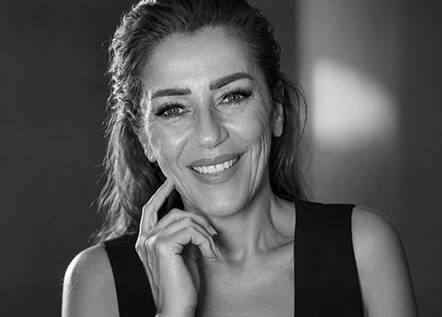
Gabriella Greison
Physicist, writer, actress and science communicator
Gabriella Greison is a physicist, writer, actress and narrator of quantum mechanics. For many years she has brought physics out of the laboratory and onto the stage, turning formulae and equations into stories capable of speaking to everyone. She has written fourteen books and created fourteen theatrical productions dedicated to the leading figures of twentieth-century physics, from Einstein to Dirac, from de Broglie to Leona Woods. Her shows have been staged throughout Italy and abroad, including in Cambridge, Washington and at CERN. She contributes to Radio 24 and Corriere della Sera, where she develops science communication projects with an innovative approach. At the heart of her work lies a single idea: physics is not something remote, but a key to understanding human relationships, emotions and the world around us every day. On the Corriere website she has created the successful series “Scintille”, in which everyday problems, from traffic to unliveable cities, are examined through the physics of complex systems.
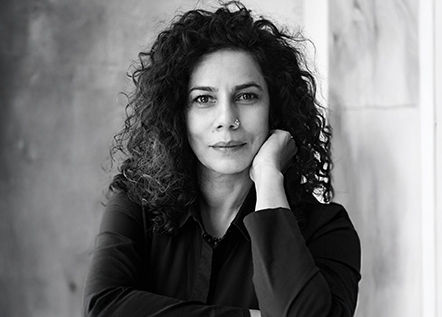
Anupama Kundoo
Founder of Anupama Kundoo Architects
Architect, PhD and lecturer, Anupama Kundoo is among the most authoritative international voices in sustainable architecture. She graduated from the University of Mumbai in 1989 and obtained her doctorate from TU Berlin in 2008; since 1990 she has developed, in Auroville, India, a research practice oriented towards people-centric architecture, based on spatial and material experimentation with low environmental impact and high socio-economic value. Her work was the subject of the solo exhibition “Taking Time” at the Louisiana Museum of Modern Art in Denmark. She has taught architecture and urban management at prestigious international universities, including Yale and Columbia, and currently holds a professorship in Architecture at TU Berlin. Her honours include the RIBA Charles Jencks Award, the Auguste Perret Prize (2021), the Building Sense Now Award from DGNB (2021) and the Global Award for Sustainable Architecture under UNESCO patronage (2022). Her research into new forms of materiality in architecture questions building habits inherited from industrialisation, focusing not on scarcity but on the abundance generated by human resources such as ingenuity, time, skill and sense of community. Her studios are based in Berlin, Mumbai and Pondicherry.
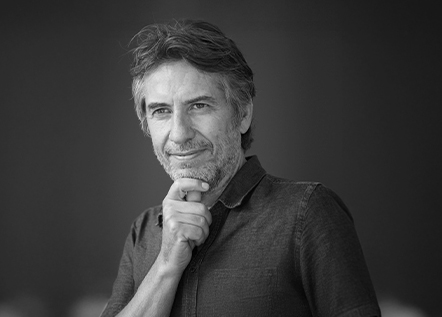
Mauro Magatti
Sociologist and economist
Mauro Magatti is a sociologist and economist. His research focuses on the relationship between economy and society, with particular attention to the transformation of contemporary capitalism, understood as a historical-social construct in which techno-economic, institutional and cultural dimensions interact. Following the influence of his mentors — including Zygmunt Bauman, Luc Boltanski and Bernard Stiegler — he has investigated the relationship between individual experience and major economic, technological and social transformations, developing in recent years, together with other scholars, the paradigm of social generativity.
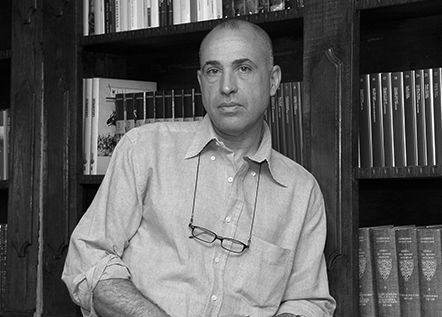
Roberto Marchesini
Ethologist, zooanthropologist and essayist
Philosopher, ethologist and zooanthropologist. Founder and director of the School of Human-Animal Interaction (SIUA) and of the Centre for Post-Humanist Philosophy Studies, based in Bologna, Roberto Marchesini is regarded as one of the world’s leading exponents of zooanthropology, a discipline he helped to found and develop as an autonomous field of research from the 1990s onward. A graduate in Veterinary Medicine in 1985, he has conducted more than thirty years of interdisciplinary research aimed at redefining the role of animals in society, developing a post-humanist philosophy directed at overcoming anthropocentrism. He is the author of more than one hundred publications in philosophy, ethology and animal bioethics, including Post-human. Verso nuovi modelli di esistenza, Fondamenti di zooantropologia and Etologia filosofica. He directs the journal Animal Studies and is among the promoters of the International Society of Zooanthropology. In 2016 a group of international scholars dedicated to him the monograph The Philosophical Ethology of Roberto Marchesini (Routledge).
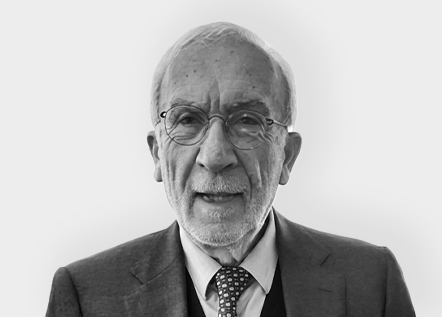
Roberto Filippetti
Iconologist and iconographer
An art and literature scholar, he taught humanities at high schools in Padua and Venice, and later iconology and iconography at the European University of Rome. He has contributed to numerous journals. His very active career as a lecturer has led him to give lectures and presentations at schools of all levels, at nearly all major Italian universities, and abroad. In Barcelona, he spoke about Giotto to the architects building the Sagrada Familia; in Beijing, he taught a course on sacred art at the National Seminary; he has given presentations in Austria, Switzerland, Slovakia, the Czech Republic, Spain, Paraguay, Peru, China, and Israel. He has also delivered remote presentations for enthusiasts in Dubai, Colombia, Brazil, Singapore, Vietnam, Malaysia, and Russia.
He has curated five educational exhibitions and authored the accompanying catalogs on Giotto’s frescoes in Padua (which attracted over one million visitors in Italy and around the world), Giotto’s frescoes in the Upper Basilica of Assisi, the masterpieces of Caravaggio, the masterpieces of Van Gogh, and the mosaics of Ravenna.
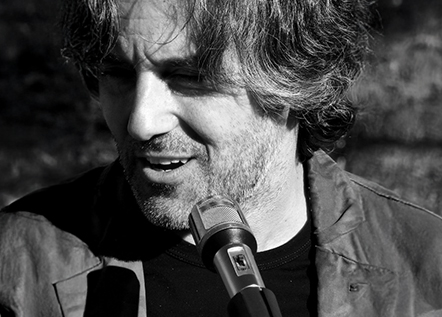
Gianluca Falcinelli
Architect
A graduate in Architecture from the University of Florence, after early professional experience with the practice of Alfio Barabani Architects (1997–2009), Gianluca Falcinelli founded his own practice, focusing on architectural design with particular attention to the recovery, restoration and transformation of existing heritage. His practice stems from a profound sensitivity to the historical, material and environmental character of places, developed through long experience in conservation and architectural regeneration. He conceives of recovery not as a simple restitution of original form, but as a process of interpretation and re-signification that brings memory and contemporaneity into dialogue, through careful research into materials, construction techniques and the relationship between the existing fabric and new intervention. Even in new-build projects, the relationship with the past remains central: architecture arises from engagement with the history of places and the search for a balance between building and landscape, between constructed space and natural environment. His work thus explores a dimension of design founded on continuity, careful attention to transformation, and the capacity of architecture to create new ways of dwelling that respect local identities. He is currently working on a digital twin of the monumental complex and its historical and artistic heritage.
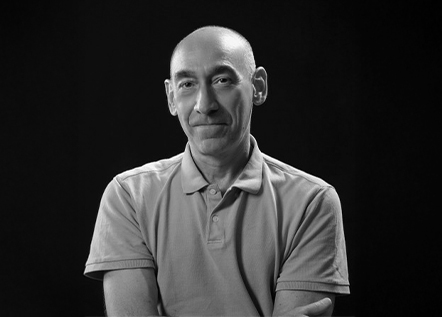
Lucio Nardi
Architect and lecturer
Lucio Nardi studied architecture in Venice (IUAV) and Berlin (UdK – Berlin University of the Arts). In 2005 he obtained a PhD in Architectural Design from IUAV. During the 1990s he worked in Berlin at the practices of Professor Giorgio Grassi (Milan) and Diener & Diener Architekten (Basel). Since 2001 he has practised independently in Berlin, where he has realised projects in industrial and residential architecture and restoration. Since 2010 he has promoted and organised participatory cultural projects in collaboration with residents’ associations, cultural bodies, theatre groups and schools. In particular, projects developed in the mining and industrial areas of former East Germany have been presented at numerous exhibitions and received several awards. He began his academic career in 2001 at the Bauhaus-Universität Weimar. Since then, he has taught in Italy (IUAV Venice, SUN Naples, University of Cagliari) and Germany (Bauhaus-Universität Weimar, UdK Berlin, MSA Münster). He currently teaches architectural and urban design at the Münster School of Architecture and collaborates with the Vietnamese German University in Ho Chi Minh City, Vietnam.
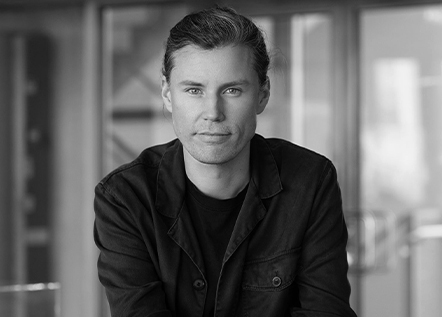
Oskar Norelius
Architect, CEO White Arkitekter, Stockholm
Oskar Norelius is a Swedish architect, Partner and Managing Director at White Arkitekter in Stockholm, one of Scandinavia’s leading architecture firms. He studied architecture in Sweden, Paris, and Spain before joining White in 2007, where he has played a key role in the firm’s international expansion and design strategy.
Notable projects include Stockholm Wood City, a multifunctional urban district set to become the world’s largest wooden structure, and the award-winning Sara Culture Center, one of the tallest wooden buildings ever constructed.
Oskar’s work has been featured in the traveling exhibitions *A Heart of Wood*, produced for Aedes Berlin, and *150,000 Trees* at the 2023 Venice Biennale. He is also a frequent speaker and keynote presenter at universities and international architecture forums.
In 2025, Oskar was selected as one of the “40 Under 40 Europe in Architecture and Design” by the European Centre for Architecture, Art, Design, and Urban Studies.
White Arkitekter is an interdisciplinary collective comprising 600 architects, designers, and sustainability experts with offices in Sweden, Germany, and the United Kingdom. With a mission to promote sustainable living through the art of architecture, White operates at the intersection of research, practice, and innovation, creating inclusive and resilient environments for present and future generations.
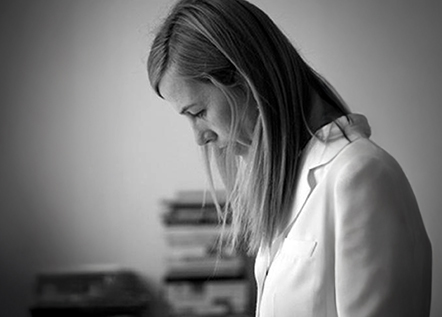
Raffaella Laezza
Scientific director, IUAV
An architect with a PhD from IUAV University of Venice, where she is Scientific Director of the “Architecture CO2=0” Master’s programme. A theorist of Eco Generative Architecture, she has developed a design method that unites macro and micro visions of nature to generate sustainable ephemeral and sacred spaces. Her work focuses on strategies for decarbonising the built heritage and on bioclimatic design models, integrating energy performance, spatial quality and environmental responsibility. She has realised numerous carbon-neutral certified pavilions, including “Futura alata e coltivabile” (2025) and various installations for Futura_Economia X l’Ambiente Expo in Brescia, and was invited to the Venice Architecture Biennale in 2025 and in a previous edition. She is the author of several volumes, including Natura d’architettura 1-7 (LetteraVentidue, 2024) and Codex of Temporary (LetteraVentidue, 2018). She divides her time between Milan, Venice and Trieste.
Raul Pantaleo
Architect, founder of TAMassociati, lecturer
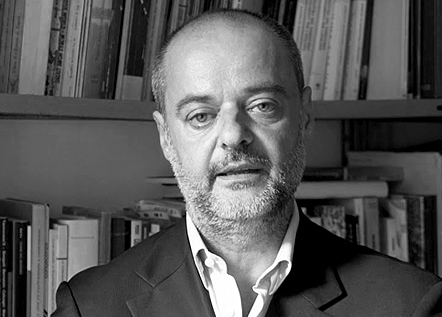
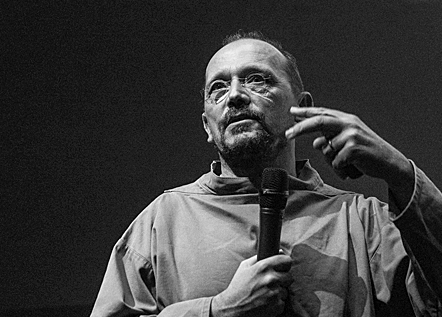
Architect and graphic designer, Raul Pantaleo is co-founder and senior partner of the Venice-based practice TAMassociati, specialising in impact design and sustainable design in the social and humanitarian sphere. Since 2004 he has collaborated with the NGO Emergency, designing hospital facilities in numerous countries including Sudan, Sierra Leone, the Central African Republic, Afghanistan and Uganda — among them the “Salam” cardiac surgery centre in Khartoum, awarded the Aga Khan Award for Architecture in 2013. With TAMassociati he has received numerous international awards, including the Curry Stone Design Prize (2013), the Zumtobel Group Award (2014) and the title of Best Italian Architect of the Year (2014). In 2016 he was a member of the curatorial team for the Italian Pavilion at the 15th Venice Architecture Biennale and a tutor for the G124 working group led by Renzo Piano at the Senate of the Republic. Since 2019 he has been a contract professor of Architectural Composition at the University of Trieste. Together with Marta Gerardi, he is also the author of several volumes combining architecture, comics and narrative reportage, including Architetture resistenti (Becco Giallo, 2013), La nave (Becco Giallo, 2024) and Architetture del noi (Elèuthera, 2025).