

Program
Filter events by:
Calendar
Seed Perugia
Seed 2026 | Performance Build / Un-build
La registrazione inizierà alle ore 17:30
Raffaele Salvoldi
Artist and performer
Live
Seed Perugia
Seed 2026 | Opening
_
Institutions, Sponsors, Partners, Supporters, Co-founders
Live
Seed Perugia
Inaugural Lecture
Mauro Magatti
Sociologist and economist
Mauro Magatti’s talk – sociologist, economist and columnist for Corriere della Sera and Avvenire – takes as its starting point his latest book, co-written with Chiara Giaccardi, Macchine celibi (Bachelor Machines: Mechanizing the Human or Humanizing the World?), offering the cultural coordinates that will guide the dialogue between scholars and designers across the festival’s four research trajectories. A lucid interpreter of the contemporary world, Magatti’s thinking rejects extreme positions: he sits neither among the technophobes nor the techno-enthusiasts, but proposes a third way. From this balanced perspective, his analysis reveals a twofold phenomenon: on one hand, artificial intelligences that are learning to simulate human behaviors, language, and even personalities; on the other, human beings who risk reducing themselves to “bachelor machines” — isolated, hyper-performing individuals, emptied of deep bonds and unable to recognize the other, prisoners of a pervasive technical-digital system that, under the promise of total transparency, reduces reality to something controllable and manipulable.
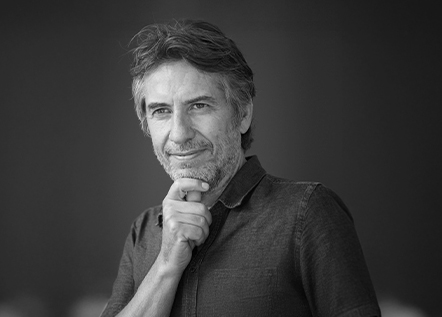 Mauro Magatti
Live
Seed Perugia | SAN FRANCESCO AL PRATO | AUDITORIUM
EVENING
Seed Perugia
Concert | Earthphonia
Max Casacci
Musician, producer, songwriter, sound engineer
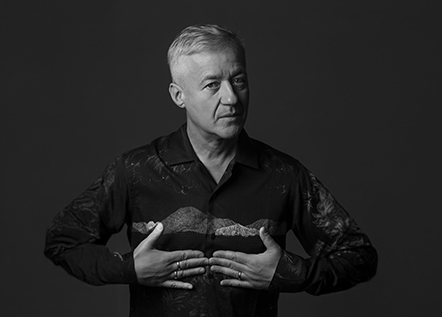 Max Casacci
Live
Seed Perugia | SAN FRANCESCO AL PRATO | AUDITORIUM
MORNING
Hosted by:
Chiara Buratti
RAI Scuola
Seed Perugia
Francis according to Giotto: A journey through beauty and truth
Roberto Filippetti
Iconologist and iconographer
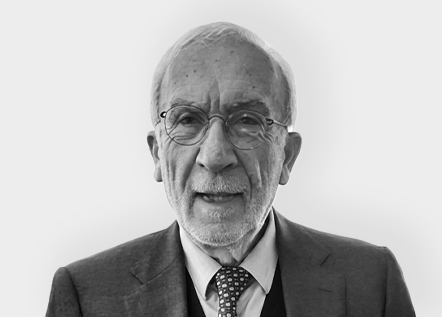 Roberto Filippetti
Live
Seed Perugia
Enhancing and creating meeting places. Urban Planning and Architecture through Nature
Seed Scuola
Liceo Artistico B. Di Betto – Architecture Section, Perugia
Emanuela Palmieri – DS e Rudy Trapassi – architetto e docente
Live
Seed Perugia
The attack on the sky.
In defence of space as a common good
Patrizia Caraveo
Astrophysicist, President of the Italian Astronomical Society
The talk by Patrizia Caraveo – astrophysicist, president of the Italian Astronomical Society and former research director at INAF – takes the theme of humanity beyond the planet’s boundaries. Never before has space been at the centre of such an economic and geopolitical race: over 4,500 satellites launched in a single year, mega-constellations comprising tens of thousands of satellites, and a new race to return to the Moon and reach Mars. Behind the opportunities offered by the space economy – which reached $686 billion in 2025 – lies, however, a less visible side: debris and the risk of collisions, impacts on the atmosphere, a night sky that is becoming increasingly difficult to observe due to light pollution produced by the thousands of satellites reflecting sunlight, and the absence of shared rules in what Caraveo describes as ‘the Wild West of the new millennium’. Hence the need to establish an ethics of interplanetary exploration and to envisage a new ecology of space, extending the principles of sustainability developed on Earth to celestial bodies and recognising space as a common good of humanity – vast, yet not infinite. An event that looks to the distant future to remind us to take care of what is close at hand.
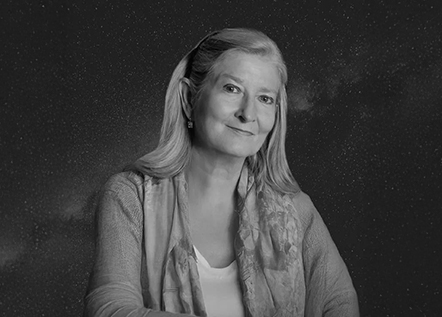 Patrizia Caraveo
Live
Seed Perugia
Thinking as an ecological issue
Luca De Biase
Journalist and writer
Marco Tortoioli Ricci
Graphic designer, lecturer at ABA
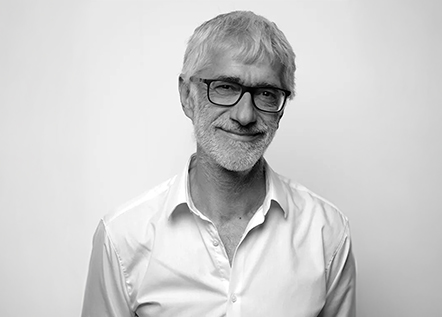 Luca De Biase
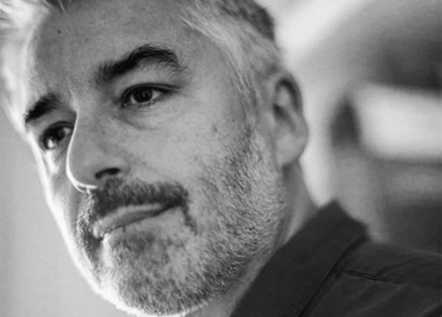 Marco Tortoioli Ricci
Live
Seed Perugia | SAN FRANCESCO AL PRATO | AUDITORIUM
AFTERNOON
Seed Perugia
Design for Disassembly. Rebuilding with the community
Alessandro Scandurra
Architect and lecturer, founder and principal of Scandurra Studio
Alessandro Scandurra presents NEW – Neighbourhood for Educational Wonder, the winning project in the 2024 international Future School for Ukraine competition, organised by the Lithuanian Government in collaboration with the Ukrainian Ministry of Education to rebuild schools affected by the conflict, in partnership with Ukrainian architect Mykhailo Vuskanskyi. Going beyond the idea of a simple, easily replicable prototype – as required by the competition brief – the studio has developed a series of design approaches capable of adapting to different contexts to meet the real needs of communities. The technological solution is based on the ‘Design for Disassembly’ strategy: a system of modular, prefabricated elements that are easy to transport, assemble and dismantle, reducing construction times and cutting emissions. This vision is complemented by a radical circular economy approach, which involved collaboration with a local start-up to recover and regenerate rubble from destroyed buildings and transform it into building materials. This initiative also serves as a metaphor for how what war destroys can become the raw material upon which to build the future.In Scandurra’s vision, the concept of a school goes beyond its purely institutional function: the spaces open up to the neighbourhood, accommodating essential services – from healthcare to psychological support – and creating a seamless connection between the building and the city. Through open corridors and garden courtyards, the architecture invites people to come together. A discussion to explore how architecture can restore a sense of humanity, rebuilding not only buildings, but also trust, bonds and a new vision of community.
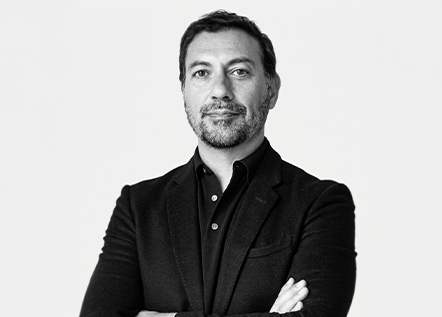 Alessandro Scandurra
Live
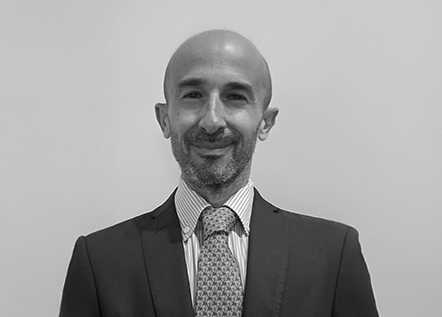 Alessandro Aresu
 Live
Seed Perugia
Living Elsewhere
Annalisa Dominoni
Designer and architect
Benedetto Quaquaro
Architect, designer and PhD
How do we sleep, eat, work and live together when the biological and visual reference points we are accustomed to are no longer present, and environmental conditions and physical laws different from those on Earth transform our bodies, the way we move and even the way we interact with others? Annalisa Dominoni and Benedetto Quaquaro, architects and designers at the Politecnico di Milano who lead ESA_LAB@PoliMI_Design, are well acquainted with these questions. In collaboration with the European Space Agency and leading companies in the sector, they design extraterrestrial habitats and objects that improve the daily lives of astronauts in confined environments and under reduced gravity. Here, every daily action must be reinvented, and designing means anticipating experiences that no one has yet had, often without being able to test them on Earth. Precisely because of its extreme nature, this laboratory becomes the most radical testing ground for rethinking the way we live: more intuitive and inclusive objects, spaces designed with their inhabitants in mind, and a use of resources that generates no waste. Led by science journalist Antonio Lo Campo, the event offers a journey beyond our planet to discover that designing for elsewhere means, first and foremost, learning to live better in the place from which we set out.
_
Presented by:
Antonio Lo Campo
Freelance science journalist
 Annalisa Dominoni
 Benedetto Quaquaro
Live
Seed Perugia
Materials in Motion
Søren Pihlmann
Founder of Pihlmann Architects
“We have already created everything we need”: the challenge is to learn to recognise the value of what surrounds us”. This concept forms the basis of the work of Søren Pihlmann – a Danish architect and founder of the practice Pihlmann Architects. One of the most interesting voices in contemporary Danish architecture and curator of the Danish Pavilion at the 19th International Architecture Exhibition – La Biennale di Venezia, Pihlmann focuses on a simple yet radical idea: building from what already exists. For him, every place is a collection of materials to be read and interpreted. Dismantling, preservation and reconfiguration bring to light the hidden potential of what our society produces in excess and discards. Even form arises from the behaviour of materials and their structural logic: irregularities, frictions and imperfections remain visible and tell the story of the process that generated them. His approach, which he himself calls ‘generative preservation’, is an ethical stance even before it is an aesthetic one – a manifesto against the throwaway culture that minimises intervention and restores new life and new meanings to the most ordinary elements. An event to look at the places we inhabit with fresh eyes and discover, in the care we take of what already exists, a possible form of the future.
Introduction by:
Laura Ragazzola
Journalist
 Søren Pihlmann
 Laura Ragazzola
Live
Seed Perugia
Lectio | The cities of the future. Building with nature
Oskar Norelius
Architect, CEO, White Arkitekter, Stockholm
Oskar Norelius, CEO of White Arkitekter – one of Scandinavia’s leading architectural practices with offices in Sweden, Germany and the United Kingdom – brings to Perugia the expertise of a firm that has made timber and bio-based materials the cornerstone of its research and design practice. Through projects such as the multi-award-winning Sara Cultural Centre in Skellefteå*, a 20-storey timber building with a positive climate impact, one of the tallest ever built, and Stockholm Wood City, a multifunctional urban district set to become the world’s largest timber-built development, he will demonstrate how the choice of material can go beyond reducing climate impact and pave the way for a new architecture and new ways of living and coexisting. For Noreius, selected as part of the ‘Europe 40under40 (2025)’ programme as one of the 40 designers under 40 who are redefining the European built environment, it is essential to change the way we view buildings, integrate diverse skills and rediscover the energy that comes from working together. An event to imagine cities capable of growing in harmony with the planet and the people who inhabit it.
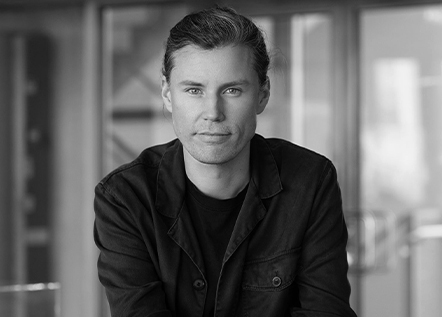 Oskar Norelius
Live
Seed Perugia | SAN FRANCESCO AL PRATO | AUDITORIUM
EVENING
Seed Perugia | SAN FRANCESCO AL PRATO | AUDITORIUM
MORNING
Hosted by:
Chiara Buratti
RAI Scuola
Seed Perugia
San Francesco al Prato – Digital Twin
Valentina Borgnini
Art historian
Gianluca Falcinelli
Architect
_
Introduction by:
Andrea Margaritelli
Engineer, President of the Guglielmo Giordano Foundation
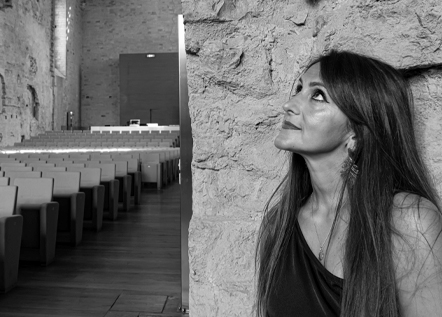 Valentina Borgnini
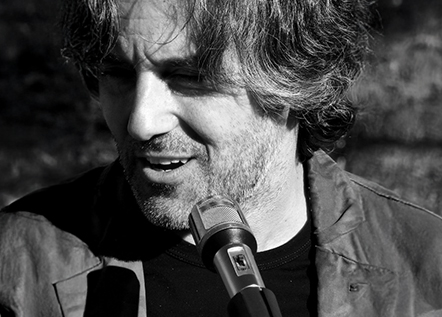 Gianluca Falcinelli
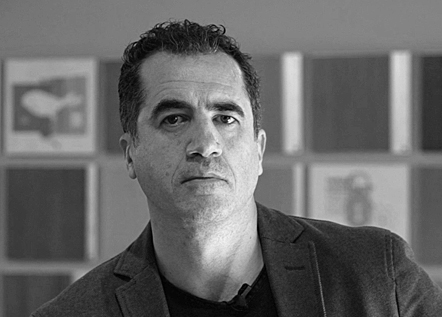 Andrea Margaritelli
Live
Seed Perugia
Seed Scuola
Musical performance by the pupils of the “Annibale Mariotti” Classical and Music High School
Live
Seed Perugia
Being human in the technological age.
The self, learning and relationships
Vittorio Gallese
Neuroscientist and professor
Ugo Morelli
Cognitive scientist and essayist, lecturer in Cognitive Sciences at the University of Naples Federico II
The talk by Vittorio Gallese – a neuroscientist who, in 1992, was part of the team that identified mirror neurons – draws on the book he co-authored with Ugo Morelli, *What Does It Mean to Be Human? Body, Brain and Relationships for Living in the Present*, to bring to Seed a reflection on what distinguishes our species from others and from machines: our interdependence with our fellow human beings and with the environment. From this premise emerges an interpretation of the present, in which our relationship with others and with the world is increasingly mediated by screens and algorithms; an era – our own – in which the plausibility of a response is mistaken for its reliability, and the user becomes accustomed to an interlocutor devoid of subjectivity, designed to agree with us. This is a transformation that directly challenges the culture of design: space, in fact, can either facilitate or hinder relationships, defining possible distances, moments of pause and the likelihood of encounters.
_
Introduction and moderation:
Barbara Binelli
Gestalt counsellor
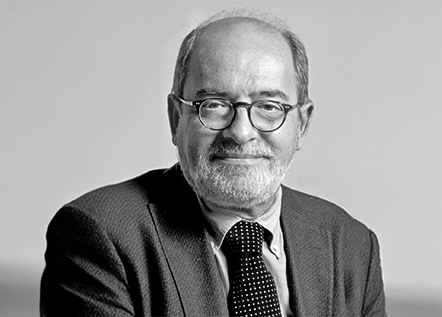 Vittorio Gallese
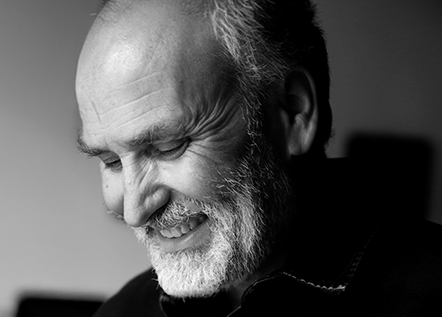 Ugo Morelli
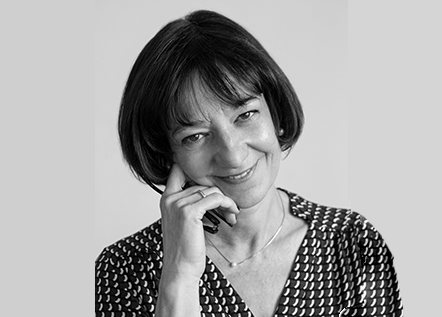 Barbara Binelli
Live
Seed Perugia
Soft Robotic. Human-robot interaction
Matteo Cianchetti
Associate Professor at the BioRobotics Institute
The talk by Matteo Cianchetti, lecturer and director of the Soft Mechatronics for Biorobotics Laboratory at the Sant’Anna School of Advanced Studies in Pisa, will take the audience on a journey of discovery into robotic agents that learn from nature and adopt its strategies: they grow like plants, stretch out and change shape. These robots are constructed from soft components and deformable structures, capable of moving with precision even in the most fragile or critical environments, without causing damage to them or to themselves. From arms inspired by octopus tentacles, which stiffen on command for minimally invasive surgical procedures, to implantable artificial organs such as the hybrid heart, right through to sensitive grippers capable of handling delicate foods, soft robotics is redefining the boundary between the artificial and the biological. A journey of discovery into machines whose intelligence lies not in software, but in the materials, form and arrangement of their parts. An event to reflect on how non-human entities can inhabit the world by adapting symbiotically to their surroundings.
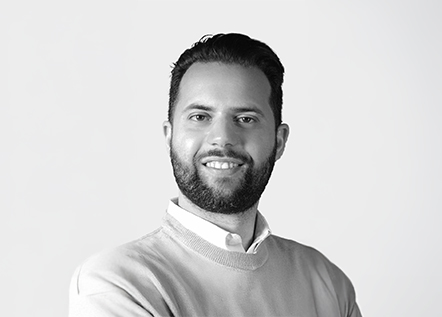 Matteo Cianchetti
Live
Seed Perugia | SAN FRANCESCO AL PRATO | AUDITORIUM
AFTERNOON
Seed Perugia
Living with our differences. Designing sustainable human-robot ecosystems
Luisa Damiano
Philosopher of science and expert in social robotics
Luisa Damiano, a philosopher of science at IULM University, where she heads the PhD School for Communication Studies and co-directs CRiSiCo, the Centre for Research on Complex Systems, takes this idea as her starting point and explores it in new territory. The focus is no longer on disembodied artificial intelligence, but on social robots: technological entities endowed with a body, a voice and a gaze, designed to be recognised as partners to human beings. What happens when these artificial bodies enter our homes, schools and public spaces, learn from us and we learn from them? Damiano explores the philosophical and ethical implications of this and challenges the principle that currently guides social robotics, namely the imitation of humans. An increasingly sophisticated resemblance risks blurring identities and giving rise to delegations of responsibility, substitutions and misplaced expectations, particularly amongst the generations who will grow up alongside these machines. Hence the idea of relationships in which the difference between human and artificial remains recognisable, as a prerequisite for socially and ecologically sustainable coexistence. In the near future, spaces designed on a human scale will have to learn to accommodate these differences, and for designers, a yet unexplored field is opening up, comprising infrastructure and new forms of living.
_
Introduction and moderation:
Barbara Cadeddu
Engineer, PhD, curator and strategic consultant
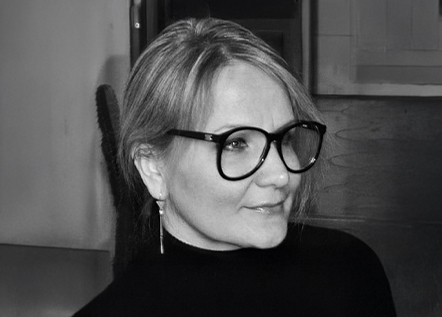 Luisa Damiano
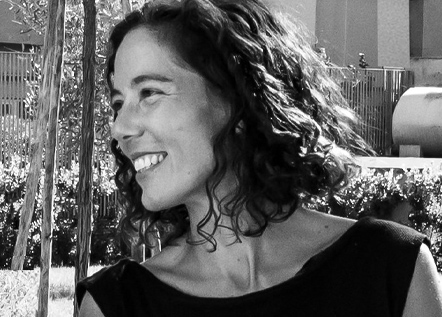 Barbara Cadeddu
Live
Seed Perugia
“Are you a human architect?” – Master IUAV Architecture CO2=0
Raffaella Laezza
Architect, PhD, Head of Research and Scientific Director at IUAV
Michele Brunello
Founder of Dont’stop Architettura and lecturer at IUAV
Maurizio Teora
Managing Director of Arup Italia and lecturer on the IUAV Master’s programme
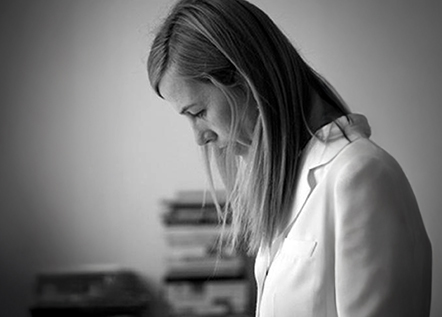 Raffaella Laezza
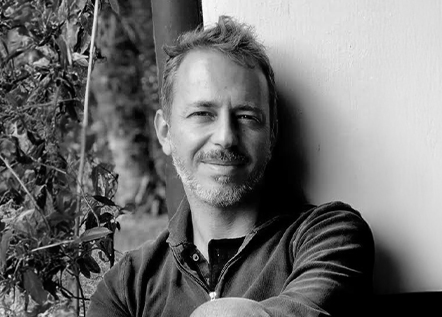 Michele Brunello
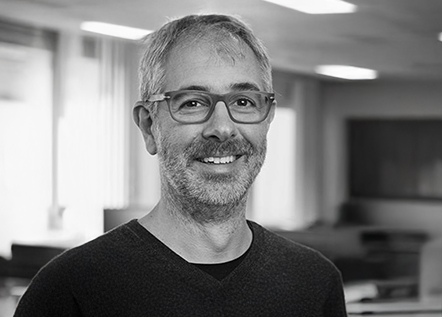 Maurizio Teora
Live
Seed Perugia
Extreme Living. Architecture of Words and Music
Raul Pantaleo
Architect, Founder of TAMassociati, lecturer
Nicola Campogrande
Composer, artistic director, music critic
and radio and television presenter
Performance of the quartet piece “Urban Gardens” by Nicola Campogrande
Trio David: Gloria Santarelli – violin, Chiara Mazzocchi – viola, Tommaso Castellano – cello and Claudio Bonfiglio – piano
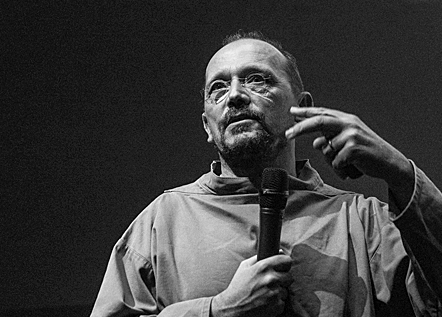 Raul Pantaleo
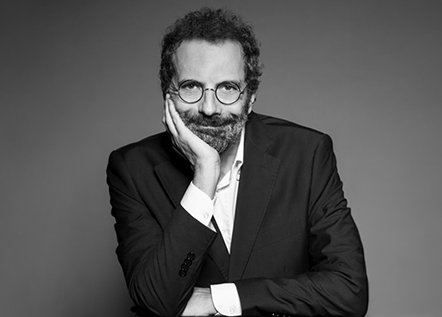 Nicola Campogrande
Live
Seed Perugia
Rethinking Materiality.
Natural resources and Human Resourcefulness
Anupama Kundoo
Founder of Anupama Kundoo Architects
Anupama Kundoo is convinced that architectural imagination, through in-depth research and experimentation with materials, can provide concrete answers to a universal human aspiration: to have shelter, a purpose and a role within the community. In her lecture, she will address the theme of human time as a resource in the search for a new materiality. She will reflect critically on how the logic of ‘time is money’ has driven us towards design dictated by regulations and towards excessive standardisation in industrial production. He will also discuss materials and the consumption of limited natural resources, and their impact on people’s well-being and their capacity for ingenuity. His practice stems from a constant quest for knowledge that enables appropriate building, and he sees every project as an opportunity to generate new knowledge. For architecture is the result of a constructive process, and time must be devoted to that process, even when rapid urbanisation seems to demand haste.
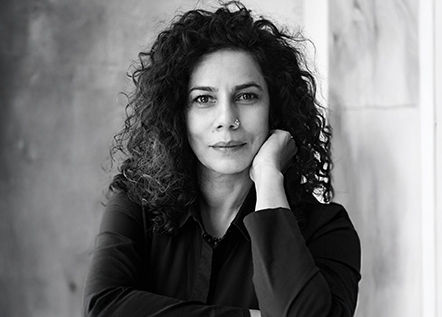 Anupama Kundoo
Live
Seed Perugia
Edicola 518. Regeneration, imagination and cultural challenges arising from the reimagining of a symbolic place
Antonio Brizioli
Founder Edicola 518
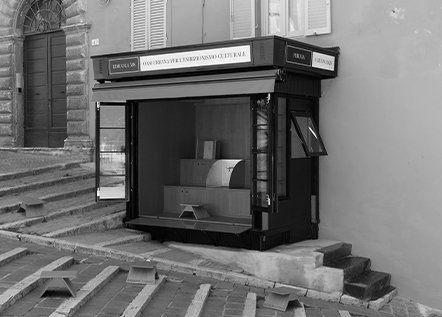 Edicola 518
Live
Seed Perugia | SAN FRANCESCO AL PRATO | AUDITORIUM
MORNING
Seed Perugia
The right to stay. Internet-connected areas: demographic crisis and isolation
Mario Tartaglia
Head of the Research and Studies Centre at the Ferrovie dello Stato Italiane Group and a member of the Board of Directors of the National Centre for Sustainable Mobility (MOST) – TBC*
Lorenzo Bellicini
Architect specialising in the economics of construction and urban
and territorial transformation, Director of CRESME
Cristiana Corritoro
Head of the General and Negotiated Planning Service for the Umbria Region
Luciano De Bonis
Deputy Director of the Scientific Council of the “Research Centre for Inland Areas and the Apennines”, University of Molise
_
Moderator:
Francesco Orofino
Founder of GAP Architetti, member of the Committee
of Experts at the National Institute of Architecture
 Francesco Orofino
Live
Seed Perugia
Who decides on the city? Complexity and responsibility for a national urban agenda
Nicola Irto
Senator and lead signatory of the draft bill on general provisions and fundamental principles
for territorial governance and planning
_
Silvia Viviani
Councillor for Urban Planning for the City of Livorno, former president of the
National Institute of Urban Planning
_
Andrea Bartoli
Creative Director, Farm Cultural Park – Favara
Speakers:
Alfio Barabani
Architect, consultant for the development of the PSUS (Strategic Plan for Sustainable Urban Development) as part of the 2021–27 Urban Agenda of the Municipality of Perugia
_
Maurizio Serafini
Engineer, ‘Urban Agenda’ Programme, Città di Castello
_
Moderator:
Giovanni Di Leo
Architect, Lead for Habitat and Regeneration at IN/Arch
 Giovanni Di Leo
Live
Seed Perugia | SAN FRANCESCO AL PRATO | AUDITORIUM
AFTERNOON
Seed Perugia
Self-nominations
Seed Scuola
Marconi Art School – Foligno
Refugee Reception Centre Project, Foligno
Giulia Gasparri and Aurora Terzarede – 5art Architettura
Maria Paola Sebastiani – Headteacher and Rudy Trapassi – architect and lecturer
Theses and research projects
*Projects for the city of Perugia
Presentation of the ‘Common – Play – Ground’ guidelines
Perugia City Council, Perugia Academy of Fine Arts, UNIPG and Temporiuso
Presentation of the visual identity for the ‘La bucata’ project
Tiziana D’Acchille – Director of ABA Perugia, Marco – Tortoioli Ricci – communications designer / Academy of Fine Arts, Perugia
*Living in times of war
ReL(V)ive. Architecture for the long-term accommodation of Ukrainian displaced persons in Lviv
Architects Samuele Raspadori, Giulio Bongiorno and Riccardo Valla
School of Architecture, Urban Planning and Construction Engineering – Milan Polytechnic
ANNOZERO. Architecture for return. Gaza Strip
Architects Guglielmo Vitelli and Francesco Zarotti – School of Architecture
Urban Planning and Construction Engineering – Politecnico di Milano
Live
Seed Perugia
The building site as a school. Project and community
Luca Astorri
Co-founder of the AOUMM studio, a member of the founding group of RISE International – a non-profit organisation active in sub-Saharan Africa – and co-director of ‘in loco’, its Design & Build fellowship programme; lecturer on the Master’s in Design for Development at the Politecnico di Milano
The talk by Luca Astorri, co-founder of the AOUMM studio and lecturer on the Master’s programme in Design for Development at the Politecnico di Milano, explores architecture that emerges on the ground, alongside the people. Together with non-governmental organisations, Astorri works in fragile and marginalised contexts, from Cairo to Nairobi, from Lesotho to the Syrian refugee camps in Lebanon. Here, the building site becomes an educational tool: a space where people learn by doing, share knowledge and strengthen community bonds. This journey, which has woven together research, practice and civic engagement, also gave rise to Save the Children’s ‘Punto Luce’ in Milan’s Gallaratese neighbourhood. Built almost entirely of timber and awarded the PEFC mention at the Klimahouse Wood Architecture Prize (2026), the centre serves both as an educational space for children and young people and as a community hub open to the neighbourhood. Its circular shape, with no beginning and no end, creates a fluid space free from hierarchies, reflecting a specific worldview. A gathering to discover how a project can become an act of care and participation, capable of fostering knowledge and community over time.
 Luca Astorri
Live
Seed Perugia
Opening and waiver. The limits of coexistence
Lucio Nardi
Architect and lecturer MSA – Münster School of Architecture
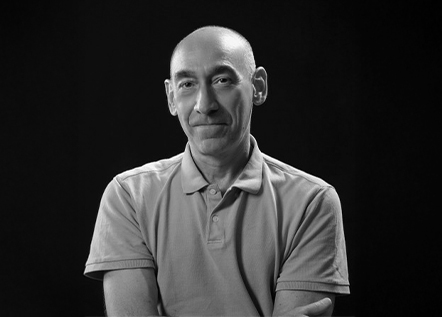 Lucio Nardi
Live
Seed Perugia
Urban Social Design. Climate comfort as a right
Belinda Tato
Associate Professor of Landscape Architecture at Harvard University
_
Introduction by:
Alessandra Battisti
Architect, PhD and lecturer
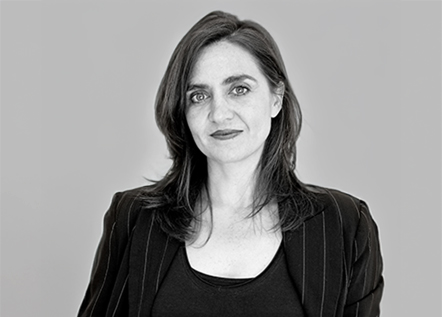 Belinda Tato
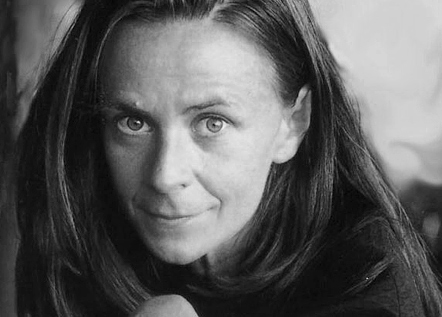 Alessandra Battisti
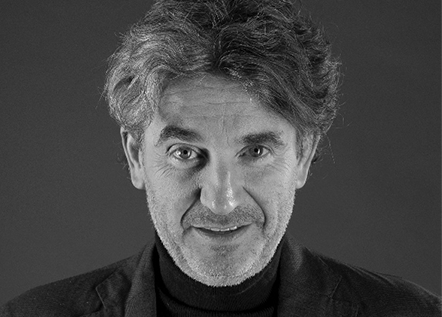 Walter Mariotti
 Live
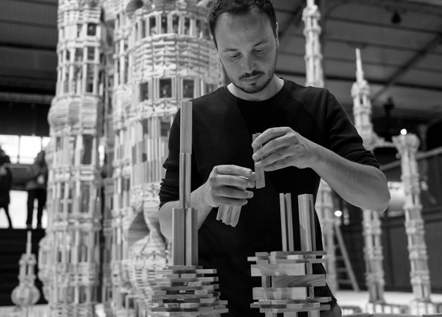 Raffaele Salvoldi
 Live
Seed Perugia
EVENING
Seed Perugia
The Woman Behind the Atomic Bomb
Gabriella Greison
Physicist, writer, actress and science communicator
 Gabriella Greison
Live
Seed Perugia | SAN FRANCESCO AL PRATO | TRANSETTO
10:00 > 20:00
Build Un-build
Installation
Seed Perugia | SAN FRANCESCO AL PRATO | FOYER
10:00 > 20:00
Seed Bookshop
EDICOLA 518
Booskshop
Seed Perugia | SAN FRANCESCO AL PRATO | CAPPELLA DEGLI ODDI
10:00 > 20:00
Thesis section, research projects, courses
and workshops
Thesis – Living in Times of War
ReL(V)ive. Architectural Solutions for the Long-Term Stay of Ukrainian Displaced Persons in Lviv, Politecnico di Milano
_
ANNOZERO. Architecture for Return. Gaza Strip, Politecnico di Milano
_
Research and Projects
International First- and Second-Level Master’s Programs, Design for Development, Politecnico di Milano
_
First-Level Master’s Program in Urban and Territorial Regeneration and Resilience, University for Foreigners of Perugia
_
Bachelor’s Degree Program in Interior Design, NABA Milan / Projects to raise awareness
of social issues and solidarity
_
Workshops and Courses
Presentation of the results of the “Playground Perugia” workshop, for the drafting of guidelines for the development and regeneration of urban space based on the “Common–Play–Ground” concept – Municipality of Perugia, Academy of Fine Arts of Perugia, UNIPG, and Temporiuso.
_
Presentation of the research and visual identity project “La bucata”: the washerwomen’s trail – developed by second-year master’s students in Brand Design at the Academy of Fine Arts in Perugia
Installation
Seed Perugia | SAN FRANCESCO AL PRATO | AUDITORIUM